The 2025 Cox Automotive Consumer Study found that 68% of connected-vehicle owners are "very concerned" about someone hacking their car. And yet, when I audit F&I menus across the country, I still see the exact same seven products I saw in 2015. Tire and wheel. GAP. VSC. Prepaid maintenance. Key replacement. Paint and interior. Theft deterrent. That's it. In a market where the average new vehicle has more lines of code than a Boeing 787, F&I offices are still selling like it's a 2008 Chevy Malibu rolling off the lot.
That's a problem. And it's an opportunity — if you know how to handle it.
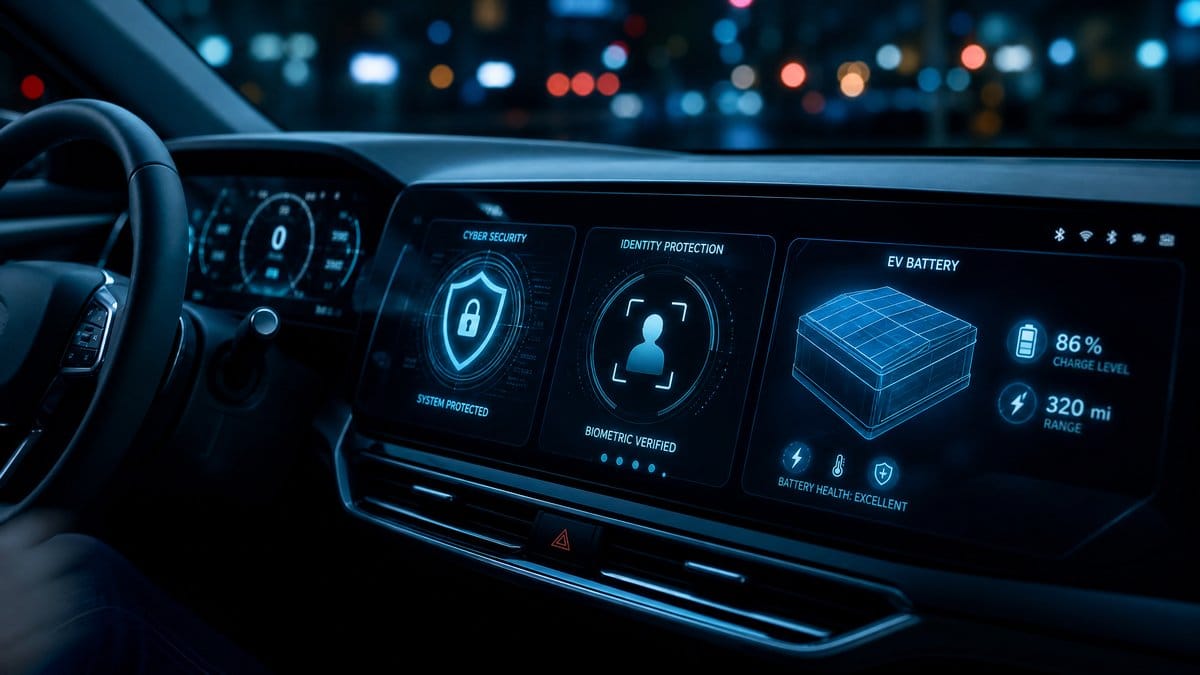
Nontraditional F&I products — cybersecurity protection for connected vehicles, identity theft coverage, EV battery warranties, drone coverage, pet injury protection — are no longer fringe experiments. They're the next $400-per-copy layer of PVR sitting on your desk waiting to be picked up. But most F&I managers won't touch them, because they don't know how to present something the customer has never heard of without sounding like a snake oil salesman. This post is going to fix that.
Why Nontraditional Products Are No Longer Optional
Let me give you the numbers that should terrify you if you're still selling the same seven-product menu you were selling five years ago. Total F&I PVR at franchise dealers dropped 16% from the 2022 peak, according to NADA's 2025 mid-year data. Front-end gross is compressed. Reserve is capped in more states every quarter. GAP penetration is flattening at around 55% industry-wide because 40% of your customers are leasing or paying cash. If your PVR strategy depends on the same handful of products doing the same work forever, you're going to lose. Slowly at first. Then all at once.
Meanwhile, look at what's actually happening in the vehicles you're delivering. The average 2025 model-year vehicle contains between 100 and 150 electronic control units. It's transmitting location data, driver behavior data, biometric data, and payment credentials — often through the same OEM app the customer uses to remote-start the car. When Toyota disclosed in 2023 that 260,000 customer records were exposed through a cloud misconfiguration, nobody at the dealership level had a product to offer that would have protected the buyer. When the FBI issued a public advisory in 2024 about "keyless relay attacks" jumping 300% year-over-year, dealers had nothing but a $50 signal-blocking pouch to offer.
You're delivering a $65,000 rolling data center to a customer who just handed you their social security number, driver's license, bank routing information, and home address — all in the span of one deal jacket. And you're not offering them protection against the digital consequences of that transaction? That's not a menu problem. That's a duty-of-care problem.
The dealers I work with who added cybersecurity and identity theft coverage to their menus in Q1 of 2025 are averaging an additional $180-$240 per copy on those two products alone. Not stacked. Not forced. Just presented properly to a customer base that already knows they're exposed. This isn't hypothetical. If your menu order system hasn't been rebuilt to accommodate this new category, you're leaving eight to twelve grand a month on the table per producer.
Cybersecurity Protection for Connected Vehicles: The Real Presentation
Here's where most F&I managers freeze. The customer has never heard of vehicle cybersecurity coverage. Neither has the salesperson. Neither, honestly, had you until six months ago. So the temptation is to over-explain, to launch into a five-minute lecture about CAN bus architecture and OTA update vulnerabilities, and by minute three the customer's eyes glaze over and they check the "no thanks" box on your menu.
Stop doing that. Nontraditional products are not sold with education. They're sold with implication.
I worked with a Nissan dealer in Arizona last month whose F&I director was struggling to move a cybersecurity product they'd just added. His pitch was 90 seconds long and included the phrase "telematics attack surface." I rewrote it to 14 seconds. Here it is: "Your vehicle connects to the internet 24/7 and stores your location, your contacts, and your payment info. This protects you if that data gets stolen or your vehicle gets remotely accessed — same way you protect your laptop or your phone." That's it. That's the pitch. Penetration went from 4% to 27% in six weeks.
Notice what I did there. I didn't teach the customer anything. I connected an unfamiliar product to two familiar ones — laptop and phone protection — that they already accept as reasonable purchases. The brain doesn't have to build a new category. It just has to file this product in an existing folder. That's the entire trick with nontraditional products. Do not create new mental categories. Attach the new product to an existing one the customer already values.
The other move is what I call the "delivery-day inevitability." Right after the customer signs, when the salesperson is doing the vehicle walkaround and pairing their phone to the infotainment system — that's when the exposure becomes visible. That's when the F&I manager who mentioned cybersecurity coverage 20 minutes earlier looks like a prophet. If you build the sales-to-F&I bridge correctly, this becomes automatic. I break that bridge down in the 15-second transition post.
One more thing. Cybersecurity coverage is best sold as a bundle, not a line item. Standalone, customers question the price. Bundled with identity theft protection under a single "digital protection" heading on your menu, penetration jumps and objections drop by roughly half. Test it in your store for 30 days.
Identity Theft Protection: The Easiest Add You're Not Making
Identity theft protection is the softest layup on this entire list, and 80% of dealers still don't offer it. The Federal Trade Commission logged 1.1 million identity theft reports in 2024. Auto-related identity fraud — where a criminal uses stolen credentials to finance a car — grew 98% year-over-year, according to Point Predictive's 2025 fraud report. Your customer just handed you every piece of PII a criminal needs. They know it. You know it. And in most dealerships, nobody says a word about it.
I had a client in Georgia who was skeptical about adding identity theft coverage. His argument: "My customers can get that from their bank for free." Fair point. Except most banks offer identity monitoring, not identity restoration. There's a massive difference. Monitoring tells you when your identity has been stolen. Restoration is the 40 to 200 hours of paperwork, phone calls, and legal documentation it takes to actually recover. The average identity theft victim spends $1,343 out of pocket and loses over 200 hours resolving the issue, per the Identity Theft Resource Center's 2024 annual report. The product you're selling covers that. The bank's free service does not. Learn the distinction. Teach it in 15 seconds.
Here's the word track that works. After GAP, after VSC, when you introduce the "protection layer" section of your menu: "You just gave me every piece of information a criminal needs to open credit in your name. This coverage handles the restoration if that ever happens — everything from disputing fraudulent accounts to full legal support if a criminal buys a car using your identity. Ten dollars a month. Almost everyone takes it."
That last line — "almost everyone takes it" — is social proof, and it's earned, because when you present it that way, they do. My clients running this word track are averaging 45-55% penetration on standalone identity theft coverage at roughly $600-$900 in gross per contract. That's a $300 PVR lift, minimum, if you commit to 100% menu presentation on every deal.
Objection handling is minimal. The main pushback you'll hear is "my bank does this for free." Your response: "Monitoring is free. Restoration isn't. This is restoration." Move on. Do not defend. Do not over-justify. If you've read the objection prevention framework, you already know why.
EV Battery Warranties: The Product Nobody Is Ready For
Here's where it gets interesting. The IEA reports EVs will represent 35% of new vehicle sales in the US by 2028. Right now we're at about 10%. That means over the next 36 months, your F&I office is going to see EV volume triple. And here's what nobody in the industry is saying out loud: the OEM battery warranty is not enough.
OEM battery warranties typically cover 8 years / 100,000 miles and only kick in when the battery degrades below 70% of original capacity. That's a huge gap. What happens at year 9? What happens if the battery loses 25% capacity but never crosses the 30% degradation threshold? What happens when the customer's range drops from 300 miles to 220 and they're furious? Nothing. The OEM says "that's normal degradation." The customer says "I paid $58,000 for this car." And you sit there without a product to solve the problem.
Third-party EV battery coverage is emerging fast. Assurant, Portfolio, and a handful of others now offer standalone EV battery warranties that cover degradation beyond OEM thresholds, extended-term battery replacement (10-15 years), and — critically — coverage for the peripheral EV components that are not the battery itself. Charging port failures. Onboard charger issues. Thermal management system failures. Any of these repairs can run $3,000 to $15,000 out of the OEM warranty window.
A used-EV market is developing right now. CPO Teslas and used Ioniq 5s are hitting franchise lots at 4-6 years old with 60,000-80,000 miles. The OEM battery warranty has 2-3 years left. The customer is buying a $32,000 used vehicle with a $18,000 battery pack inside it and no long-term protection. That's the ideal EV battery warranty candidate. Present that product on every used EV deal and your penetration will run above 70% because the fear is real and rational.
Word track for new EV buyers: "The battery in this vehicle is worth about $15,000 to replace, and the factory warranty only covers catastrophic failure — not the slow degradation that happens over years. This coverage protects the entire electric drivetrain, including the battery, for 10 years and covers gradual capacity loss the factory won't. Most EV buyers add it once they see the math."
Word track for used EV buyers: "You're inheriting the previous owner's battery. We don't know how it was charged. We don't know how many times it was fast-charged. This protects you against premature degradation and full battery replacement, which right now runs about half the vehicle's value. It's the single most important coverage on an electric vehicle."
If you're selling EVs and not offering standalone battery coverage, you're missing what will be the largest new product category in F&I over the next five years. I talk about this in the context of the lease return tsunami — many of those returning vehicles are EVs, and they're the exact demographic that will need this coverage.
Drone Coverage and Pet Injury Protection: The Lifestyle Layer
Now let's talk about the two products most F&I managers laugh at — until they see the numbers. Drone coverage and pet injury protection are what I call "lifestyle layer" products. They're not core F&I. They don't belong on your menu. But they belong on your consultation, and the difference matters.
Drone coverage sounds ridiculous until you look at the demographics. Roughly 900,000 drones are registered with the FAA, and there are millions more unregistered recreational units flying every weekend. When a drone crashes into a customer's vehicle — and it happens more than you'd think — the FAA's liability rules are murky, homeowner's insurance often denies the claim, and comprehensive auto coverage triggers a deductible and a claim on their record. A dealer-offered drone-strike rider costs pennies to include and covers the deductible plus any loss-of-use fees. It's not a huge revenue product on its own, but bundled into a "specialty coverage" section, it drives conversation and separates you from every other F&I office your customer has ever sat in.
Pet injury protection is a bigger deal. Approximately 45% of American households own a dog, and roughly 60% of pet owners transport their pet in a vehicle multiple times per week. Pet injury coverage — typically $1,000 to $2,500 per incident for veterinary care after an accident — is offered by some insurers as a standard rider, but most customers don't have it. When you offer it as a $50-$150 add-on inside your F&I menu, penetration among pet owners runs 30-40%. You know how you find out if they're a pet owner? You ask, during the meet-and-greet, in the 60 seconds it takes to build rapport before you sit down. If you're not doing a 60-second pre-deal scan, you're missing this signal every single time.
The reason these products matter isn't the PVR — it's what they do to your positioning. When you offer coverage for the customer's drone, their dog, their charging port, their identity, and their vehicle's cybersecurity, you stop being "the finance guy" and start being the customer's protection advisor. That perception shift is worth more than any single product on the menu, because it lowers resistance on everything else. Customers who feel understood buy more. Customers who feel sold to buy less. It's that simple.
One dealer group I coach in Florida added drone and pet coverage to a "lifestyle protection" section at the bottom of the menu. Combined attach rate: 22%. Combined PVR contribution: $87. That's a rounding error, right? Except when you multiply $87 across 3,400 deals a year across nine stores, it's $295,800 in incremental gross that didn't exist 18 months ago. Rounding errors add up.
How to Present Unfamiliar Products Without Confusing the Customer
This is the core skill. Everything I've said above only works if you can present a product the customer has never heard of in under 20 seconds without triggering their skepticism. Here's the framework I use with every client. Four steps. Memorize it.
Step 1: Anchor to a known concept. Never introduce a nontraditional product cold. Always attach it to something the customer already understands and values. Cybersecurity coverage? "Like antivirus for your car." Identity theft? "Like the LifeLock commercials, except we handle the restoration." EV battery? "Like an extended warranty, but for the most expensive part." Drone coverage? "Like your homeowner's deductible protection, but for what falls out of the sky." Pet injury? "Like health insurance for your dog while they're in the vehicle." One sentence. Move on.
Step 2: Quantify the exposure. Give them a specific, credible number. "Average battery replacement: $15,000." "Average identity theft cost: $1,343 out of pocket, 200 hours to resolve." "Average out-of-warranty EV repair: $4,800." Numbers create urgency. Vague fear does not. And do not invent numbers — the customer will Google it later and if you were wrong, you lose all credibility forever.
Step 3: Ratio the cost. Convert the price into a comparison the brain accepts. Do not say "$14 a month." Say "$14 a month — less than your Netflix subscription — covers up to $15,000 in exposure." Ratio thinking bypasses the objection. If you're stacking properly, you're anchoring off the base payment and everything is expressed in a monthly increment that feels rational against the total commitment.
Step 4: Ask for the decision, not the explanation. Do not say "does that make sense?" Say "want it included or not?" The first question invites objection. The second invites decision. Weak F&I managers hunt for understanding. Producers hunt for closure. If the customer has a real question, they'll ask it. If they don't have a question, don't manufacture one for them by asking if they understand.
Run these four steps in under 25 seconds per product. If it takes longer, you're over-explaining. Over-explanation is the number-one killer of nontraditional product sales. The customer interprets a long explanation as "this must be complicated, therefore risky, therefore no." A short, confident presentation says "this is normal, everyone buys this, decide yes or no." Confidence sells complexity. Anxiety kills it.
The dealers with the highest penetration on nontraditional products aren't the ones with the best product knowledge. They're the ones with the tightest presentation. Twenty-five seconds per product. Anchor, quantify, ratio, close. That's it. If your producers can't do this on every unit, you don't have a training problem — you have an installation problem, and it needs to be fixed before you add another product to the menu.
Building the New Menu: Where These Products Actually Belong
Now let's talk architecture. You cannot just add five new products to your existing menu and hope for the best. Menu architecture matters. The order matters. The grouping matters. The visual hierarchy matters.
Here's how I'm building menus for 2026 with my client base. Three tiers. Tier one: core vehicle protection — VSC, GAP, prepaid maintenance, tire and wheel. Tier two: physical protection — key replacement, appearance, dent, windshield. Tier three: digital and lifestyle protection — cybersecurity, identity theft, EV battery, drone, pet. Each tier gets its own visual section on the menu with a clear header. Customers process the menu in tiers, not as one flat list of 12 products.
Why does this matter? Because when a customer sees 12 products on a flat menu, they assume they need to say no to most of them. When they see three logical categories, they assume they need to say yes to at least one item in each category. That's not a trick. That's psychology. The framing changes the default answer.
The upgrade architecture approach I teach applies here perfectly. Present the "full coverage" tier that includes something from each of the three sections. Anchor high. Let the customer downgrade if they need to. But start with everything included. If you start with nothing included and try to upsell each product individually, you'll be presenting for 30 minutes and closing 40% penetration. Not sustainable.
One more architectural point. Do not put nontraditional products at the top of the menu. They belong in tier three, after the core products are already committed. Why? Because customers who have already said yes to VSC and GAP are in "yes mode." Their brain is running an accept-pattern. That's when you introduce the unfamiliar products. Never the reverse. If you lead with cybersecurity coverage before you've established the core sale, you'll trigger skepticism that poisons the entire rest of the deal. Sequence matters. This is what most F&I managers get wrong when they try to add nontraditional products cold — they place them wrong on the menu and then blame the product for not selling.
Track penetration on nontraditional products separately from your traditional products for the first 90 days. If cybersecurity is running below 15% attach, your presentation is broken, not the product. If EV battery coverage is under 40% attach on EV deals, your F&I team doesn't believe in it yet. Coaching fixes both. And you can't fix what you don't measure, which is why the 5 KPIs that predict F&I performance matter more than any single product decision.
The Compliance Layer Nobody Is Talking About
Here's the thing nobody wants to discuss. Nontraditional products introduce new compliance exposure. Cybersecurity coverage that overpromises. Identity theft coverage that misrepresents restoration versus monitoring. EV battery warranties with language that conflicts with OEM warranties. The FTC has already warned 97 dealer groups about F&I process issues, and you can bet nontraditional products will be next on the enforcement list.
Before you add any nontraditional product, do three things. First, get the provider's disclosure language in writing and have your compliance officer review it against your state's F&I statutes. Second, record and grade at least 20 presentations of the new product in the first 60 days to make sure your producers aren't overpromising or misrepresenting coverage. Third, build the product presentation into your customer survey strategy so you can catch misrepresentation before a regulator or plaintiff's attorney does.
The producers who blow up cybersecurity presentations do it by saying things like "this protects you against any kind of hack." That's false. It doesn't. The producers who blow up identity theft presentations say "we'll get your money back." That's not what the coverage does. The producers who blow up EV battery presentations say "this covers everything the factory doesn't." Usually not exactly true. Precise language protects you. Sloppy language creates lawsuits.
Word tracks solve this. If every producer in your shop is using the same 25-second script for each nontraditional product, and that script has been reviewed by compliance, you eliminate 90% of your exposure in one move. This is why the top F&I manager process concept matters — free-form presentation is where compliance issues are born. Standardized presentation is where compliance risk goes to die.
Nontraditional products are the future of F&I profitability. But they're also the future of F&I liability if you don't install them properly. Do both. Add the products. Standardize the language. Grade the presentations. Coach the process. That's the whole game.
Frequently Asked Questions
What are nontraditional F&I products and why do they matter now?
Nontraditional F&I products are coverage categories that fall outside the traditional seven-product menu of VSC, GAP, maintenance, tire and wheel, key, appearance, and theft. The emerging categories are cybersecurity protection for connected vehicles, identity theft protection, EV battery warranties, drone strike coverage, and pet injury protection. They matter now because traditional F&I PVR is compressed 16% from its 2022 peak, and dealers need new product categories to maintain profitability. Connected vehicles, EV adoption, and rising identity fraud have created legitimate consumer exposure that older F&I menus don't address. The top-performing dealers in 2026 will have already integrated these products into their menu architecture.
How do I present a product the customer has never heard of?
Use the four-step framework: anchor, quantify, ratio, close. First, anchor the unfamiliar product to something the customer already understands ("like antivirus for your car"). Second, quantify the specific dollar exposure ("average battery replacement is $15,000"). Third, ratio the monthly cost to a small comparison ("less than your Netflix subscription"). Fourth, ask for the decision, not the explanation ("want it included or not?"). The entire presentation should take under 25 seconds. Over-explanation triggers skepticism. Confidence and brevity signal legitimacy. Never introduce nontraditional products cold — always attach them to a familiar concept the customer already accepts as reasonable.
Where should nontraditional products sit on the F&I menu?
Nontraditional F&I products belong in tier three of a three-tier menu structure, after core vehicle protection (VSC, GAP) and physical protection (key, appearance, dent). Placing them at the top of the menu creates skepticism because the customer isn't yet in "yes mode." Placing them at the bottom, after core commitments have been made, dramatically increases attach rates. Group cybersecurity and identity theft as a "digital protection" bundle rather than standalone line items — bundled penetration runs roughly double standalone penetration on these products. EV battery coverage belongs in tier one for EV deals, since it's core protection on an electric vehicle rather than an add-on.
What's the biggest risk when adding nontraditional F&I products?
The biggest risk is compliance exposure from imprecise language during the presentation. Producers who overpromise cybersecurity coverage ("protects against any hack"), misrepresent identity theft restoration as guaranteed recovery, or claim EV battery warranties cover "everything the factory doesn't" create liability for the dealership and potential FTC enforcement exposure. Mitigation requires three steps: get provider disclosure language reviewed by compliance, record and grade at least 20 presentations in the first 60 days, and standardize word tracks so every producer uses identical language. Free-form presentation of unfamiliar products is where lawsuits are born. Standardized, compliance-approved scripts are the only defensible path.
Which nontraditional F&I product has the highest ROI to add first?
Identity theft protection has the highest ROI to add first because customer awareness is already high, restoration coverage is easily differentiated from free bank monitoring services, and the cost is low enough that penetration typically runs 45-55% with a proper 15-second word track. Average gross per contract runs $600-$900, driving a PVR lift of $270-$495 on stores that commit to 100% menu presentation. Cybersecurity coverage is the second-easiest add when bundled with identity theft under a single "digital protection" category. EV battery warranties have the highest per-deal gross but are limited to your EV volume, making them a longer-term investment rather than an immediate PVR fix.