The Binder Problem Nobody Talks About
Every F&I training program produces two things: a certificate and a binder. The certificate goes on the wall. The binder goes on the shelf. And within 60 days, the performance improvement that briefly appeared after the training event goes back to wherever it came from.
This is not a criticism of trainers or training programs. The information in most of those binders is accurate and, in some cases, excellent. The problem isn't the content. The problem is the model — an event-based approach to a behavioral challenge that doesn't respond to events. It responds to repetition, reinforcement, and accountability over time.
The distinction between training and installation is the most important conceptual distinction in F&I performance improvement. Most dealerships, most F&I directors, and most managers themselves don't see it — not because they're not sharp, but because the training industry has spent decades packaging event-based solutions that look like performance solutions. The binder looks like a system. The certificate looks like evidence of competency. But six weeks after the training, the numbers tell a different story.
Here's what actually happens after a training event: the manager returns to the store, applies the new framework with enthusiasm for ten to fifteen deals, encounters the first difficult customer who doesn't respond the way the training examples suggested, reverts to the familiar habit pattern that felt more reliable under pressure, and never fully reinstalls the new approach. Not because they didn't absorb the training. Because the training wasn't designed to survive the first difficult customer.
Installation is. That's the difference. And understanding it is the prerequisite for making a decision about F&I performance improvement that actually produces durable results.
Across more than 200 stores where ASURA has installed its coaching system, the average PRU increase is $759 per unit — sustained over time, not visible for six weeks and then gone. That number exists because installation is what happened, not training. Knowing what installation actually means is what allows a dealer principal, an F&I director, or a manager to choose the right approach and stop buying outcomes that disappear with the binder.
What Training Actually Delivers — and What It Doesn't
Training is information transfer. It gives a manager access to a framework they didn't have before — the logic of a menu system, the language of a protection-focused presentation, the structure of a box opening sequence. That information, when absorbed, is genuinely useful. A manager who understands the theory of objection prevention is better equipped than one who doesn't.
What training doesn't deliver is automatic behavior. Knowing how a box opening should work is a completely different thing from having a box opening that runs automatically, correctly, under the pressure of a difficult customer, on the fourteenth deal of a Tuesday when you're tired and the salesperson handed you a bad deal and the customer is already agitated before they sat down.
That gap — between knowing and automatic behavior — is where training fails. And it fails predictably, repeatedly, and at the same point in almost every case: the first high-pressure situation where the new framework requires more cognitive effort than the old habit.
When the new behavior requires active thought and the old behavior runs on autopilot, the autopilot wins. Not because the manager made a choice — because human performance under pressure defaults to the most practiced behavior available. If the new behavior isn't practiced enough to become automatic, it doesn't survive real conditions.
Training gives you knowledge. Installation builds the automatic behavior. The bridge between them is repetition under feedback — which is the definition of coaching, not training.
What Installation Actually Means
Installation is the process of taking a performance framework from intellectual knowledge to automatic execution through coached repetition, in-context practice, and ongoing accountability. It is not a one-time event — it is a sustained operational rhythm that maintains and improves behavior over time.
When the ASURA OPS system is installed at a store, what happens isn't a two-day seminar followed by a handshake and a certificate. What happens is a structured sequence of in-store work, roleplay, deal-specific feedback, and a coaching cadence that continues after the initial installation — because behavior that isn't maintained drifts, and drift doesn't announce itself until it shows up in the PRU number.
There are three things installation delivers that training cannot:
1. In-context correction. Installation means someone with expertise is watching the behavior in the actual environment — on the showroom floor, in the F&I box, during real deals. When the box opening sequence drifts, it gets corrected immediately, before the habit re-forms around the incorrect version. Training can't do this. There's no one watching the fourteenth deal after the training event. The manager who made a small error on deal fourteen doesn't know they made it, so they repeat it on deal fifteen, and twenty, and fifty — and the error becomes the new normal.
2. Pressure-condition practice. Roleplay done well is not rehearsing what you'd say in ideal conditions. It's practice under conditions that approximate real pressure — difficult customer types, specific objection scenarios, late-week fatigue simulations. Installation builds behavior that works under conditions that training only describes. The difference shows up in every deal where something doesn't go the way the training examples suggested it would — which is most deals.
3. A cadence that prevents drift. The most important thing installation includes is a structure that doesn't end. The 15-minute weekly coaching meeting, the monthly data review, the deal-specific debriefs — these exist specifically to catch the behavioral drift that happens in every high-performing environment when there's no reinforcement structure. Training produces a one-time improvement. Installation produces a permanently elevated production floor that compounds over time.
The Salesperson Analogy That Makes This Obvious
No serious dealership installs a salesperson by sending them to a two-day sales training and then leaving them alone to figure it out. A new salesperson shadows experienced closers, rides along on deliveries, has their presentations reviewed in real time, gets coached on specific deals that went wrong, and participates in ongoing meetings about technique and objection handling.
That process takes months, not days, because everyone understands intuitively that sales performance is built through repetition and feedback — not through information transfer alone. Nobody expects a salesperson to walk out of a training event closing at full proficiency. That expectation would be absurd.
But in F&I, that exact expectation gets applied all the time. A manager goes to a two-day program, comes back, and there's an implicit assumption that the training produced the result. When it doesn't, the conclusion is usually that the training wasn't good enough, or the manager isn't implementing it — neither of which addresses the actual problem, which is that the model doesn't work the way the expectation assumes it does.
Install F&I performance the same way a dealership installs sales performance: in-context, over time, with coached repetition and sustained accountability. The timeline is similar. The investment is similar. The result — a manager who runs a high-performance process automatically, in real conditions, under real pressure — is similar. And because F&I performance at the top end is measured in hundreds of dollars per deal and thousands of deals per year, the return on that investment is substantially greater than any equivalent investment in the sales department.
The Three Points Where Training Fails
Training doesn't fail randomly. It fails at three predictable points, and understanding those points clarifies exactly what installation needs to address.
Point 1: The first difficult customer.
The training examples work in the training room because they're constructed to work. The customers are cooperative, the objections are standard, and the manager has full cognitive bandwidth to apply the new framework because there's no actual pressure — just the simulated pressure of a training scenario.
Real customers are not constructed to cooperate with your new framework. The first customer who says something the training didn't prepare for, who has an objection structure the roleplay didn't cover, or who comes in already agitated about something that happened on the sales floor — that customer is where the training framework meets reality. Most newly trained managers revert to their pre-training default in that moment, and the reversion happens so fast and so naturally that they're often not even aware it occurred.
Installation addresses this by putting the coaching relationship in the room — or as close to the room as possible. In-store observations, post-deal debriefs, and specific roleplay on the exact scenarios that produced reversion all create behavior that survives the first difficult customer because it's been practiced in difficult-customer conditions, not just described in a training environment.
Point 2: The busy period.
When a store gets busy, precision is the first thing that gets sacrificed. Managers who were running eight survey questions start running five because there are three deals backed up and the GSM is asking what's taking so long. The box opening that was tight gets compressed. The protection language that was precise gets approximated. The presentation that was taking eighteen minutes starts taking twelve — and the twelve-minute version, while faster, is missing the specific elements that were producing the results.
Without installation, this compression becomes permanent. The manager learns that the abbreviated version is survivable, the urgency never fully goes away, and the full-precision version never comes back. The result is a manager who performed well for four weeks post-training and then plateaued at a level slightly above but not meaningfully different from where they started.
Installation's response to the busy period is the coaching cadence — specifically, the weekly behavioral review that catches compression as it happens and course-corrects before the abbreviated version becomes the new habit. The 15-minute meeting exists precisely for this: to see what changed in a high-volume week and bring the precision back before it's lost.
Point 3: The leadership vacuum.
Most F&I managers work in an environment where nobody around them has F&I-specific expertise. The GM manages outcomes, not behaviors. The F&I director covers too many stores to give any one manager detailed attention. The DMS vendor's representative is a software trainer, not an F&I coach. The result is that most F&I managers operate in a leadership vacuum for everything that matters at the behavioral level — and a manager without behavioral accountability drifts back to whatever produced comfort and familiarity, regardless of whether that produced elite results.
Installation fills this vacuum. Not by adding administrative oversight, but by providing the specific expertise needed to evaluate F&I behavior accurately and give feedback that's grounded in what elite performance actually looks like. A GM who says "your PRU was down last month" is telling a manager what happened. A coach who says "your survey was missing the investment tolerance question on three of the five deals I reviewed" is telling the manager why it happened and what to do about it. The second conversation is the one that changes behavior.
What to Ask Before You Invest in Any F&I Coaching
The training-versus-installation distinction gives you a clear filter for evaluating any F&I performance program before you commit resources to it. The questions are simple, and the answers are diagnostic.
"What happens the week after the training?" If the answer is "you'll have the materials and you can reach out with questions," you have a training program. If the answer describes a specific follow-up structure — weekly coaching meetings, deal reviews, in-store visits — you have something closer to installation.
"How do you measure whether the behavior changed, not just the PRU?" Any program that can only measure outcomes is measuring the result of behavior, not the behavior itself. That's a trailing indicator — it tells you what happened months after the behavior changed or didn't change. A program that measures specific behavioral markers — survey completion rate, box opening structure, protection language precision — is working at the level that actually drives the outcome.
"What's the accountability structure between sessions?" Training programs don't have an accountability structure between sessions. Installation does — and it's specific. If you can't get a clear answer to "who is accountable for the manager's behavior between our last session and the next one," you have a training program that calls itself coaching.
"How long does the engagement run?" Training runs for days. Installation runs for months. The behavioral change that produces $759 in average PRU increase doesn't happen in a two-day event — it happens across a sustained engagement where behavior is built, corrected, and reinforced until it's automatic. If the engagement timeline is measured in days, the result will be measured in weeks. If it's measured in months, the result builds permanently.
Why Most Dealerships Keep Buying Training
If installation works and training doesn't produce lasting results, why do most dealerships keep buying training programs? The answer is the same reason most people make decisions that don't serve their long-term interests: training produces a visible short-term result that feels like progress, and the cost of installation feels higher in the moment even though the ROI is substantially greater.
A training event costs a predictable amount, produces a visible 30-day improvement, and generates positive energy in the department. The manager comes back energized. The numbers move in the first month. The perception is that the investment worked.
When the numbers drift back, the explanation is usually "we need to do it again" — so the training cycle repeats every 12 to 18 months, producing the same 30-day improvement, the same drift, and the same conclusion. The total cost of that cycle, over three years, typically exceeds the cost of a real installation. But because each training event is a discrete purchase and the drift is slow and gradual, the pattern is hard to see from inside it.
Installation looks more expensive at the front end because the engagement is longer and the commitment is greater. What installation actually costs is less than the accumulated cost of repeated training cycles that produce results that don't stick. And what installation produces — a manager operating at a permanently elevated level — compounds over every deal they process, every month, for as long as they're in the box.
The math is not complicated. But it requires being willing to evaluate the investment over the right time horizon.
Frequently Asked Questions
What is the difference between F&I training and F&I installation?
F&I training is an event-based information transfer — a seminar, workshop, or certification program that gives a manager access to a framework or methodology. F&I installation is a sustained behavioral intervention that builds automatic execution of that framework through in-context practice, coached repetition, and ongoing accountability. Training produces knowledge. Installation produces performance. The difference shows up predictably within 60 days of any training event, when behavior drifts back toward the pre-training baseline.
Why does F&I training fail to produce lasting results?
Training fails because it addresses knowledge but not automatic behavior. Under real conditions — a difficult customer, a backed-up queue, a bad deal handed over by a salesperson — managers default to the most practiced behavior available, not the most recently learned behavior. If the new framework isn't practiced enough to become automatic, it doesn't survive the first high-pressure situation. Installation builds the behavior to the level of automaticity that lets it survive real conditions, because it includes the repetition and in-context feedback that training doesn't.
How long does F&I installation take?
Meaningful installation — getting a manager to the point where the core framework runs automatically under real conditions — typically takes 90 days of consistent coaching. Initial results typically appear within 30 days when the box opening sequence and client survey are installed correctly. Full system performance, with all four ASURA OPS pillars running at precision, develops across three to six months of active coaching cadence. The 15-minute weekly meeting maintains and compounds the results after the initial installation phase.
What metrics prove that F&I installation is working?
Behavioral metrics — survey completion rate, box opening structure, protection language precision, and upgrade conversion rates by product category — are the leading indicators that installation is working. PRU and penetration rates are the lagging indicators that confirm the behavior is producing results. A program that only measures PRU is watching the outcome, not the cause. Installation tracks behavior directly, which gives you the ability to course-correct before the behavioral drift shows up in the PRU number weeks later.
Is ongoing coaching necessary after the initial installation?
Yes — with an important clarification. After full installation, the volume of coaching required to maintain performance is significantly less than the initial phase. The 15-minute weekly coaching cadence is the long-term maintenance structure. Without it, even fully installed behavior drifts within 60 to 90 days because high-volume environments naturally produce compression and approximation without a regular behavioral reset. The cadence is what converts a performance peak into a permanent floor.
What does the ASURA OPS installation look like in practice?
The ASURA OPS installation begins with an in-store assessment that identifies specific behavioral gaps against the four-pillar framework. A structured installation sequence then addresses each pillar — box opening and survey precision first, followed by menu order and protection language, then upgrade architecture and objection prevention integration. Throughout, the coaching cadence runs weekly, tracking behavioral markers and resetting precision before drift accumulates. The full installation produces the $759 average PRU increase across coached stores — not as a spike, but as a sustained new production floor.
Can a GM or F&I director run the installation without outside coaching?
Theoretically possible; practically very rare. The challenge is that running a high-quality behavioral installation requires specific F&I expertise — the ability to watch a presentation, identify exactly where the precision slipped, and provide feedback that's actionable enough to change the behavior. Most GMs and F&I directors don't have that expertise at the level of granularity installation requires. And even those who do typically can't maintain the behavioral observation frequency needed across multiple stores. External coaching exists because the expertise and the time aren't usually available internally at the required level.
How do I know if my current F&I coaching is training or installation?
Ask three questions: Does the engagement include in-store behavioral observation (not just monthly calls reviewing numbers)? Is there a specific accountability structure between sessions that tracks behavior rather than just outcomes? And is there a formal weekly cadence that continues after the initial program ends? If the answers are no, no, and no — you have a training program that calls itself coaching. If the answers include specific behavioral monitoring, deal-level feedback, and a sustained cadence, you have something closer to installation.
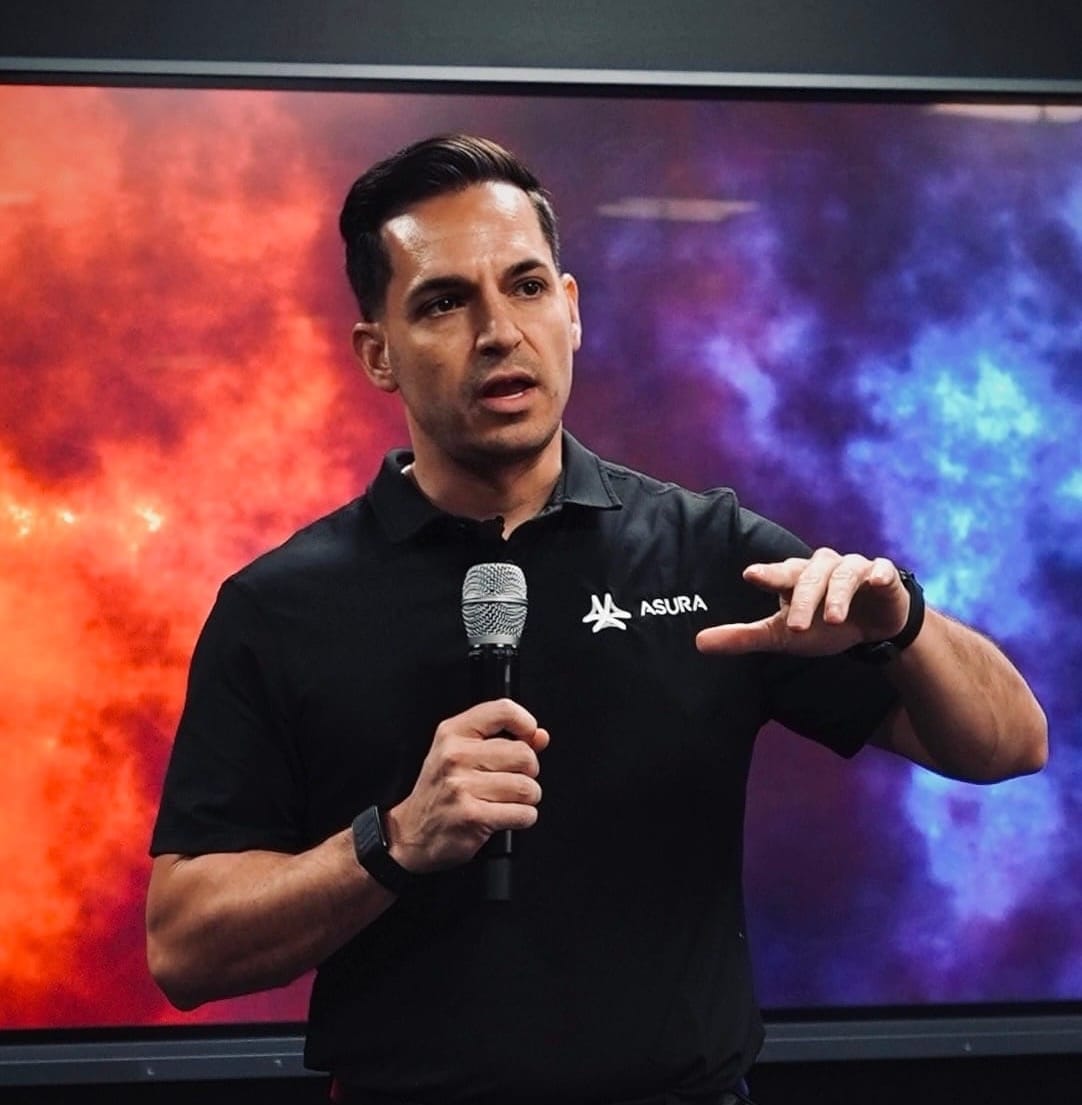
Adrian Anania is the VP of Performance and Operations at ASURA Group. He has coached F&I managers and directors at more than 200 franchised dealerships nationwide, generating over $200 million in found revenue for his clients. The ASURA approach is installation, not training — because installation is what produces results that stay.