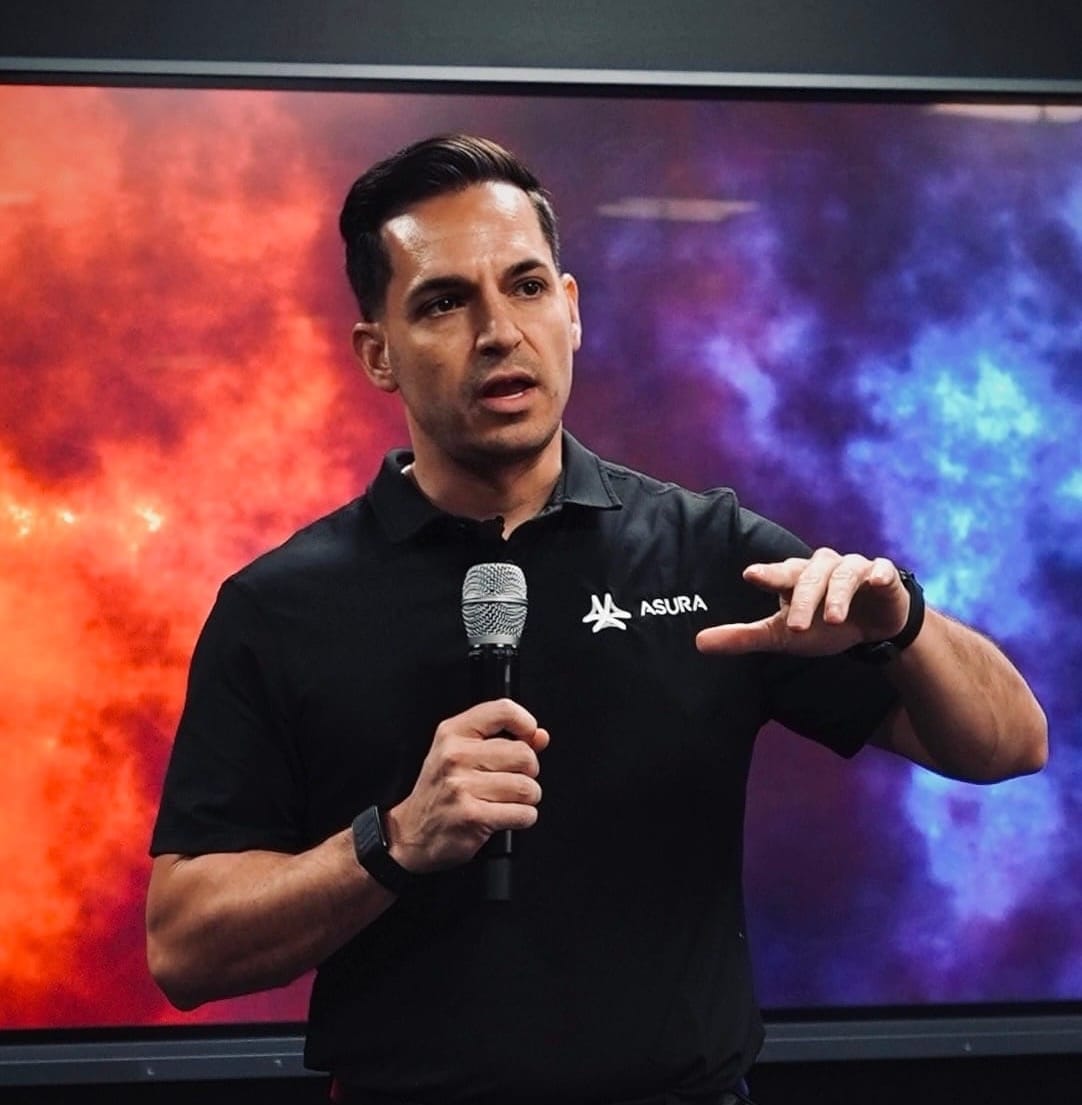
The 15-minute weekly coaching cadence is the single most potent system for driving massive, sustainable growth in F&I performance, consistently delivering an average PVR gain of $759 per unit. This isn’t a motivational gimmick; it’s a surgical, data-driven process that creates a high-frequency feedback loop. By focusing on incremental, one-percent improvements week after week, this system compounds small adjustments into a radical transformation of results. My name is Adrian Anania, founder of ASURA Group, and we have installed this exact cadence in dealerships across the country, turning stagnant F&I departments into revenue-generating powerhouses. The results are not theoretical—they are proven, repeatable, and undeniable.
The Fatal Flaw in Traditional F&I Training
Traditional F&I training is fundamentally broken. It operates on an event-based model that creates temporary excitement but fails to produce lasting change. Dealerships spend thousands of dollars sending their managers to two-day seminars or bringing in a trainer for a week-long boot camp. The manager returns fired up, armed with a binder full of scripts and a head full of ideas. For a week, maybe two, they try to implement everything they learned. They’re motivated, they’re energized, and they might even see a small bump in their numbers. But then, reality sets in. The first tough customer, the first backed-up service drive, the first chaotic Saturday—and they revert right back to their old habits. The binder gathers dust on a shelf, and their performance flatlines exactly where it was before.
The core problem is a lack of a sustainable system for implementation and accountability. Information overload without a process for integration is useless. It’s like trying to drink from a firehose. You get soaked, but you don’t retain much. This is precisely why so many talented F&I managers find themselves hitting a performance ceiling, unable to break past a certain PVR. They feel stuck, frustrated, and often blame the market, the customers, or the sales department. The truth is, their process is the problem. We see this constantly, and it’s a key reason we wrote about the 5 Breakdowns Keeping F&I Managers Stuck Under $200K. The 15-minute weekly coaching cadence is the antidote to this cycle of failure. It replaces the one-time motivational spike with a consistent, disciplined process of incremental improvement. It’s not about a revolution; it’s about evolution.
How the 15-Minute Weekly Coaching Cadence Works
The 15-minute weekly coaching cadence is a structured, recurring meeting between an F&I manager and their director, designed for ruthless efficiency. The entire meeting revolves around three simple steps: analyzing one specific data point, identifying one critical bottleneck, and prescribing one actionable adjustment for the upcoming week. It is a surgical strike, not a blanket bombing. The goal is to isolate the single biggest lever that will drive the most significant result and focus all energy on that one thing. This relentless focus is what makes the system so powerful.
Step 1: The Data Point
The meeting begins with the F&I manager presenting a single, pre-determined metric from the previous week. This is not a comprehensive review of their entire performance. It is a focused look at one specific area. The metric could be anything from vehicle service contract (VSC) penetration on new vehicles, to the percentage of client surveys completed, to the average reserve per deal. The key is to choose one and only one. The manager must come to the meeting prepared with their numbers. This isn’t a guessing game; it’s a data-driven conversation. This discipline of tracking and analyzing performance is a hallmark of what we call the Data-Driven F&I Manager. It’s about replacing gut feelings with hard facts.
Step 2: The Bottleneck
Once the data is on the table, the next step is to identify the bottleneck. Based on the numbers, where is the single biggest point of failure or opportunity for improvement? For example, if the manager’s overall VSC penetration is 60%, but their VSC penetration on cash deals is only 25%, the bottleneck is clear. The conversation then becomes about diagnosing the “why” behind that number. Is it a mindset issue? A process gap? A specific word track that’s failing? This is a collaborative diagnosis, not an interrogation. The director’s job is to guide the manager to the root cause of the problem. It’s not about placing blame; it’s about achieving clarity. The manager might say, “I find that once a customer says they are paying cash, I mentally check out on the VSC presentation.” That’s a bottleneck.
Step 3: The Prescription
The final step is the prescription. Based on the identified bottleneck, the director provides one—and only one—specific, actionable instruction for the manager to execute in the week ahead. This is not a vague piece of advice like “try harder on cash deals.” It is a precise, tactical directive. It might be a script, a process change, or a specific action to take at a certain point in the F&I process. For the manager struggling with cash deal VSC penetration, the prescription might sound like this:
“This week, on every single cash deal, after you’ve completed the financial snapshot and built that initial credibility, I want you to look the client in the eye and use this exact phrase: ‘Mr. and Mrs. Client, since you’ve chosen to pay cash for the vehicle, you are also choosing to take on 100% of the financial risk of a major mechanical breakdown. My responsibility is to show you a way to transfer that risk off of your shoulders and onto the back of a multi-billion dollar corporation.’ Then, you will immediately pivot to the highest-level protection package on your menu that includes the VSC. Do not ask for permission; just make the transition.”
That is a prescription. It is clear, concise, and measurable. The manager knows exactly what to do, and the director knows exactly what to measure in the following week’s meeting.
Why 15 Minutes is the Magic Number
The 15-minute timeframe is not arbitrary; it is a critical component of the system’s success. It is intentionally designed to force ruthless focus and eliminate the fluff that plagues most business meetings. When you only have 15 minutes, you don’t have time for excuses, long stories, or philosophical debates. You have time for data, diagnosis, and a directive. This brevity is what makes the cadence so powerful and sustainable.
It Forces Clarity and Eliminates Fluff
A 60-minute meeting invites rambling. A 15-minute meeting demands precision. The compressed timeframe forces both the manager and the director to come prepared and get straight to the point. The manager can’t hide behind vague statements, and the director can’t go off on tangents. The entire interaction is focused on finding and fixing the single most important issue. This level of clarity is impossible to achieve in a longer, less structured meeting.
It Creates Unbreakable Consistency
One of the biggest lies in the automotive industry is “I don’t have time.” Everyone has 15 minutes. The short duration of this meeting makes it incredibly easy to schedule and, more importantly, to stick to. It can be done at the beginning of the day, at the end of the day, or even over a quick cup of coffee. There are no excuses to miss a 15-minute meeting. This consistency is the engine of compounding improvement. A one-percent improvement every week for 52 weeks doesn’t result in a 52% improvement; it results in a 168% improvement. That is the power of compounding, and it is fueled by the unbreakable consistency of the 15-minute cadence.
It Builds Unstoppable Momentum
The system is designed to create a continuous cycle of small wins. When a manager implements a specific prescription and sees a tangible result in their numbers the following week, it builds confidence and hunger for more. Success breeds success. This positive feedback loop creates momentum that is incredibly powerful. The manager starts to see themselves as someone who is constantly improving, constantly growing, and constantly winning. This identity shift is the ultimate outcome of the 15-minute cadence. It transforms them from a passive participant in their career to an active, data-driven operator who is in complete control of their results.
The F&I Director’s Role: Coach, Not Critic
For the 15-minute weekly coaching cadence to be effective, the F&I Director must undergo a critical mindset shift. Their role is not to be a critic who points out flaws, but a coach who provides actionable guidance. The tone of the meeting must be one of collaboration and support, not judgment and condemnation. The goal is to build the manager up, not to tear them down. This requires a fundamental change in the dynamic of the relationship, from one of a boss and a subordinate to one of a coach and a player.
The coach’s job is to see the potential in their player and to provide the specific tools and strategies needed to unlock that potential. This means moving away from questions like “What did you do wrong?” and towards questions like “Let’s find the one thing we can refine this week to drive a better result.” It’s a subtle but profound shift in language and intent. The director must also be a master of the F&I process themselves. They cannot provide a prescription if they do not have a deep understanding of the plays. This includes mastering the language of elite F&I professionals, such as framing the offerings as “protections” not “products.” This is a core concept we drill down on in our training and is something we’ve detailed in our article on Protections Not Products. When the director operates as a coach, the manager becomes more receptive to feedback, more willing to be vulnerable, and more committed to the process of improvement.
Real-World Example: From $1,800 to $2,600 PVR in 90 Days
The transformative power of the 15-minute weekly coaching cadence is best illustrated with a real-world example. We worked with a manager—we’ll call him Mike—at a high-volume domestic store. Mike was a good, hardworking F&I manager, but he was stuck. He had been averaging around $1,800 PVR for over a year and couldn’t seem to break through that ceiling. His director was frustrated, and Mike was on the verge of burning out. They had tried everything—seminars, online courses, incentive programs—but nothing worked. We came in and installed the 15-minute weekly coaching cadence. Here’s what happened over the next 90 days:
Weeks 1-4: The Client Survey. In their first meeting, Mike and his director looked at the data and found a glaring hole: Mike was only completing a proper client survey on about 50% of his deals. The prescription for the first week was simple: achieve 100% completion of the client survey, no exceptions. They focused on this single metric for four straight weeks. By the end of the first month, Mike was at 100% completion, and his PVR had already jumped to over $2,000. The simple act of consistently gathering information was allowing him to make better recommendations and close more protections.
Weeks 5-8: The Menu Presentation. With the client survey dialed in, they moved to the next bottleneck: the menu presentation. Mike was using a generic, one-size-fits-all approach. The prescription was to implement a specific, four-column menu and to use a precise word track when presenting the top-level protection package. They drilled this one aspect of the process for another four weeks. Mike’s confidence in his menu presentation soared, and his PVR climbed to $2,350. He was no longer just showing options; he was guiding clients to a logical conclusion. This is the power of a structured menu process, a system we’ve detailed in our guide on how to go from Menu Presentation $1,200 to $3,000.
Weeks 9-12: Objection Prevention. The final piece of the puzzle was objection prevention. Mike was still getting stalled by the common “I don’t need that” or “I’ll think about it” objections. The prescription was to integrate an objection prevention system directly into his financial snapshot presentation at the beginning of the F&I process. By pre-handling the most common objections before they even came up, he was able to maintain control of the conversation and guide it to a successful close. Over the next four weeks, he mastered this technique, and his PVR crossed the $2,600 threshold. In just 90 days, Mike had added $800 to his PVR, not through a magic bullet, but through the disciplined, incremental process of the 15-minute weekly coaching cadence.
Key Takeaways
- The 15-minute weekly coaching cadence is a system for sustainable F&I performance growth, averaging a $759 PVR increase.
- It replaces ineffective, event-based training with a consistent, process-driven approach.
- The system consists of three steps: analyzing one data point, identifying one bottleneck, and prescribing one actionable adjustment.
- The 15-minute timeframe forces ruthless focus, ensures consistency, and builds momentum through small, compounding wins.
- The F&I Director’s role is to be a coach, not a critic, providing specific, actionable guidance in a supportive manner.
- Real-world application of this cadence has shown to increase PVR by as much as $800 in just 90 days by focusing on incremental improvements in specific areas like the client survey, menu presentation, and objection prevention.
- Lasting change comes from disciplined, incremental improvements, not from one-time motivational events.
Frequently Asked Questions
What if we don’t have an F&I Director who can coach?
This is a common problem, and it’s a leadership failure. If the F&I Director is not capable of coaching, the General Manager or Dealer Principal must step in. Someone must own the process. If there is truly no one in the dealership who can provide this level of coaching, it is a sign of a much larger systemic issue. In that case, seeking outside help from a performance coaching company like ASURA Group is the next logical step.
Can this be done in a group setting?
No. The 15-minute weekly coaching cadence is a one-on-one process. Its power lies in its specificity to the individual manager’s performance. A group setting dilutes the focus and accountability. While group training has its place for teaching broad concepts, this specific cadence must be executed individually to be effective.
What if the manager is resistant to coaching?
Resistance is usually a symptom of fear. The manager is afraid of being judged, of looking incompetent, or of being put on a performance plan. This is why the “coach, not critic” mindset is so critical. The director must create a safe environment where the manager feels comfortable being vulnerable. If the resistance persists even in a supportive environment, it may be an indication that the manager is not a fit for a high-performance culture.
How do we choose the one metric to focus on?
Start with the biggest leak in the boat. Look at the manager’s numbers and identify the area with the most significant gap between their current performance and elite-level performance. Is it their VSC penetration? Their per-copy average on reserve? Their charge-back rate? Start with the metric that, if improved, will have the most immediate and significant impact on the bottom line.
What happens if we miss a week?
Don’t. The consistency of the cadence is non-negotiable. Missing a week breaks the momentum and signals that the process is not a priority. If a meeting must be rescheduled due to a true emergency, it must be rescheduled within the same week. The discipline of the cadence is just as important as the content of the coaching.
How long should we focus on one metric?
You should focus on one metric until the desired behavior becomes an unconscious habit. This could take two weeks or it could take six. The goal is not to rush through a checklist of metrics, but to create lasting change in the manager’s process. Once a specific skill is mastered and the results are consistent, you can move on to the next bottleneck.
Can this system work for sales managers as well?
Absolutely. The principles of the 15-minute weekly coaching cadence—data-driven analysis, bottleneck identification, and prescriptive coaching—can be applied to any role in the dealership. It is a universal system for performance improvement that can be adapted to sales, service, or any other department.
What if we don’t see results immediately?
The system is designed to produce incremental gains that compound over time. While some managers may see a significant jump in the first few weeks, others may see a more gradual improvement. The key is to trust the process and to remain consistent. As long as the manager is implementing the prescriptions and the data is trending in the right direction, the results will come. Patience and discipline are paramount.
The 15-minute weekly coaching cadence is not a secret or a magic trick. It is a simple, powerful system that, when executed with discipline and consistency, will fundamentally transform your F&I department’s performance. It’s time to stop wasting money on ineffective, event-based training and start investing in a process that delivers real, sustainable results.
If you are ready to stop guessing and start executing a proven system for F&I excellence, I want to invite you to learn more about our exclusive ASURA Core community. And if you want to get a head start, send me a DM with the word “SYSTEM” on my Instagram, and I’ll share some more resources with you directly.
Common Mistakes to Avoid When Implementing the 15-Minute Cadence
While the 15-minute weekly coaching cadence is a simple system, it is not easy. It requires discipline and commitment from both the manager and the director. There are several common mistakes that can derail the process and prevent it from delivering the desired results. Avoiding these pitfalls is just as important as executing the steps correctly.
Mistake #1: Lack of Preparation
The most common mistake is a lack of preparation. If the manager comes to the meeting without their numbers, or the director hasn't thought about the key metric to focus on, the 15 minutes will be wasted. Both parties must come to the meeting prepared to have a productive conversation. The manager must have their data ready, and the director must have a clear idea of the area they want to focus on. This preparation is what allows the meeting to be so efficient and effective.
Mistake #2: Trying to Boil the Ocean
Another common mistake is trying to address too many issues at once. The power of the 15-minute cadence lies in its focus on a single metric and a single prescription. When a director tries to cram three or four different coaching points into one meeting, they are diluting the message and confusing the manager. The goal is to make one-percent improvements in multiple areas over time, not to try and fix everything at once. This requires patience and a long-term perspective.
Mistake #3: Inconsistent Execution
Inconsistent execution is the death of the 15-minute cadence. If meetings are constantly being missed or rescheduled, the momentum is lost, and the process breaks down. The cadence must be treated as a non-negotiable appointment. It is the most important 15 minutes of the week for the F&I manager's development. When the director and the manager both treat it with that level of importance, the results will follow.
Mistake #4: The Critic Mindset
As mentioned earlier, the director's mindset is critical. If the manager feels like they are coming to a weekly interrogation, they will become defensive and closed off. The director must create an environment of psychological safety where the manager feels comfortable being vulnerable and admitting their weaknesses. This is the only way to have an honest and productive conversation about performance. The director's role is to be a coach and a mentor, not a judge and a jury.