
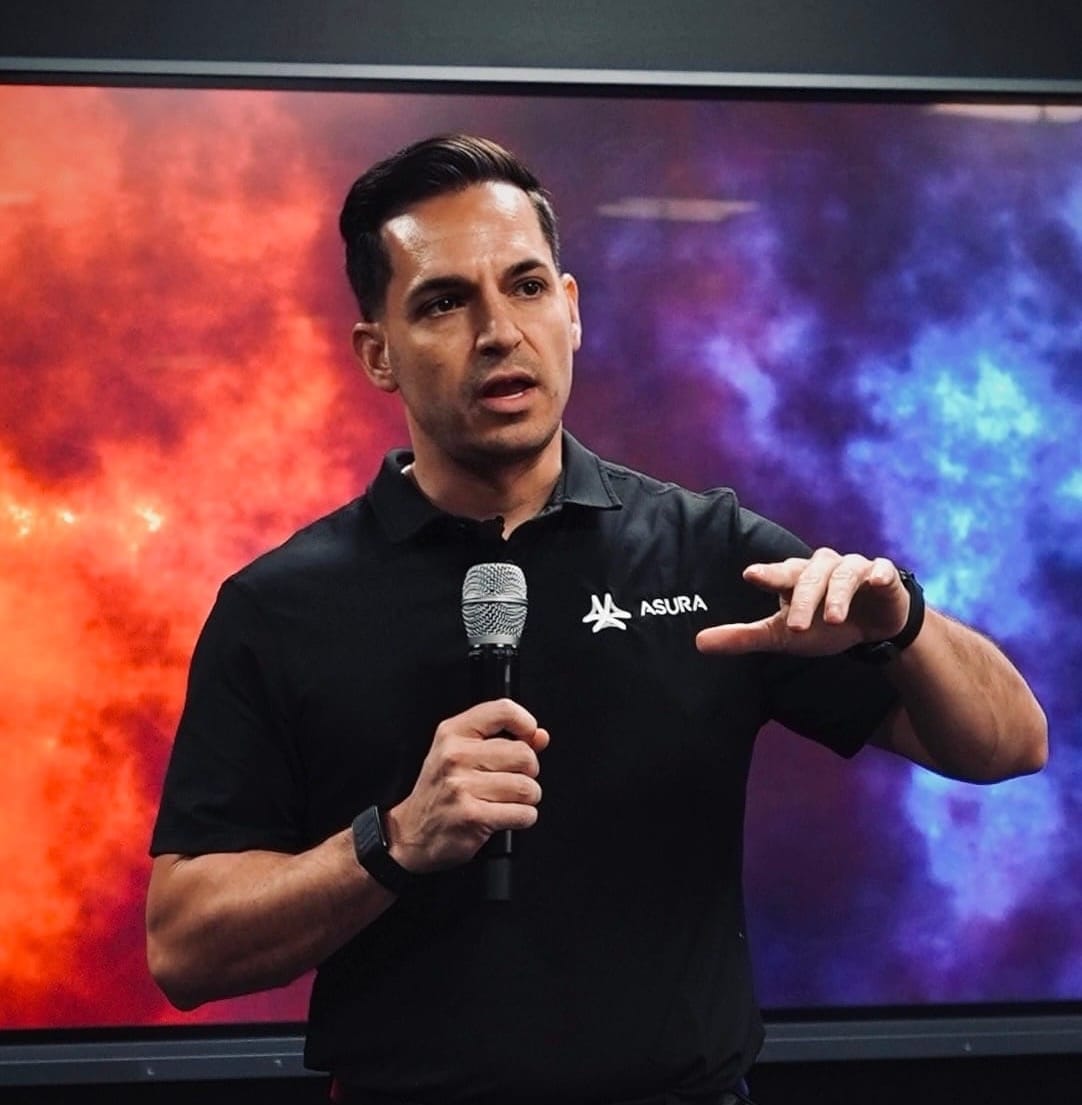

The viral Andy Elliott post claiming F&I managers are quitting in droves is missing the real story. The reality is, AI will never close a deal, build value, or save a blown transaction, but it will absolutely expose every F&I manager who relies on personality over process. If you are skipping steps, shortcutting the menu, or winging your presentations, you are replaceable. But if you master the system, you become the one asset no algorithm can replicate.
Here's the deal. Right now, the automotive industry is obsessed with the idea that artificial intelligence is going to automate the F&I office out of existence. You see the TikTok trends. You see the LinkedIn thought leaders predicting the end of the traditional finance manager. And with average monthly payments hitting a record high of $777 in July 2026, and 31% of trade-ins carrying an average of $7,200 in negative equity, dealer principals are looking for any way to cut costs and streamline operations. They are looking at AI as the silver bullet.
But they are looking at the wrong target. The problem isn't that F&I managers are obsolete. The problem is that too many F&I managers are operating like order-takers instead of elite professionals. When you have 25% of buyers carrying $10,000 or more in negative equity, an AI chatbot isn't going to structure that deal for same-day funding. An algorithm isn't going to look a customer in the eye and explain why they need GAP coverage when they are already stretched thin. That requires human connection, strategic thinking, and a relentless commitment to execution discipline.
The biggest thing is understanding the difference between a transaction and a consultation. A transaction is just moving numbers from one column to another. AI can do that. A consultation is diagnosing a problem, prescribing a solution, and guiding a customer through a high-stakes financial decision. AI cannot do that. If your entire day consists of printing paperwork and pointing to where the customer needs to sign, you should be worried. But if your day consists of installing a process that protects the dealership's gross and the customer's financial future, you are untouchable.
The Myth of the AI F&I Manager
Let's get one thing straight right out of the gate. AI is a tool, not a replacement. It can process data faster than you. It can pull credit reports, calculate debt-to-income ratios, and even generate a menu presentation in milliseconds. But what happens when the customer says, "I don't need the extended coverage, my mechanic is my brother-in-law"?
AI doesn't know how to handle that. AI doesn't understand the nuance of human emotion, the fear of unexpected repair bills, or the psychology of a base payment anchor. It can't read the body language of a husband and wife who are silently arguing about whether they can afford the extra $40 a month. It can't pivot mid-presentation to address an unspoken objection.
This is NOT about AI being useless. This IS about understanding where its limitations lie. AI is fantastic for the pre-deal scan. It can aggregate the numbers—the repayment matrix, the buyer's order—so you can grab them and go get the customer. But once you are in the box, the technology stops and the human element takes over. The reality is, closing a deal requires empathy, authority, and the ability to build trust in a high-pressure environment. No machine can do that.
Think about the current state of the market. Used car prices are up $1,300 to $3,600 in the first half of 2026. Used vehicle values rose 4.8% in June alone. Customers are walking into the box with more anxiety than ever before. They are worried about affordability. They are worried about the economy. They are worried about making a mistake. An AI interface cannot look them in the eye and say, "I understand your concern, but let's look at the math." An AI interface cannot use the Objection Prevention Framework to dismantle their fears before they even articulate them.
Can you help me understand how a machine is supposed to navigate a conversation with a customer who has a 580 credit score, $8,000 in negative equity, and a strict budget? It can't. It will just spit out a rejection or a payment that the customer will immediately decline. It takes a Tier-1 operator to structure that deal, find the right lender, and present the protections in a way that makes logical sense to the buyer.
Furthermore, consider the impact of auto tariffs. With approximately $10.6 billion paid by US automakers on parts from Canada and Mexico, new vehicle prices are up 10-20%. This means the stakes are higher than ever. Customers are financing larger amounts over longer terms. They need guidance, not just a digital checkout screen. They need a professional who can explain why protecting a $50,000 investment is non-negotiable.
Why the "Replaceable" Label Exists
So if AI can't do the job, why is the narrative that F&I managers are replaceable gaining so much traction? Because, frankly, a lot of them are.
If your entire process consists of printing out a menu, sliding it across the desk, and asking, "Which one of these works best for you?"—you are replaceable. If you are relying on your charm, your jokes, or your ability to "read the room" instead of a structured Menu Order System, you are replaceable. If you are skipping the client survey because you think you already know what the customer wants, you are replaceable.
The industry is shifting. Dealer profits were down 16% in the first half of 2026. Margins are shrinking. The days of getting by on natural talent and a good personality are over. Dealerships can no longer afford the variance that comes from inconsistent execution. They need structural consistency. They need a process that produces predictable, high-level results every single time, regardless of who is sitting in the chair.
When an F&I manager fails to follow a system, they become a liability. They leave money on the table. They expose the dealership to compliance risks—and with the FTC sending warning letters to 97 dealer groups earlier this year, compliance is not something you can afford to mess around with. State AG penalties are piling up: $3.1 million in Maryland, $3.2 million in New York, $20 million in Illinois. This is why dealer principals are looking at AI. Not because they want to replace you, but because they want to replace the inconsistency you bring to the table.
They are tired of the excuses. They are tired of hearing that the customers were "grinders" or that the sales desk "gave away the farm." They want results. And if an AI system promises to deliver a consistent, compliant process—even if it means a lower PVR—many dealers will take that over the rollercoaster of a personality-driven manager.
This isn't semantic. It's structural. The dealership model is under pressure. Retail sales forecasts are flat at 13.6 million units. 44% of dealers expect profits to fall. In this environment, every single deal matters. You cannot afford to blow a transaction because you didn't feel like following the process today. If you are inconsistent, you are a risk. And businesses eliminate risk.
The Anatomy of an Irreplaceable F&I Manager
How do you make yourself irreplaceable? You stop relying on yourself and start relying on the system. You transition from being a talented individual to being a Tier-1 operator who executes a proven architecture with absolute precision.
Here is what that looks like in practice:
1. The Pre-Deal Scan
The irreplaceable manager doesn't spend 15 minutes analyzing a deal before going out to meet the customer. They do a quick, 60-second scan. They look at the numbers they agreed to and the client survey. They don't need vehicle specs, lender details, or a deep dive into the credit profile. They grab the numbers, go get the customer, and process them. They handle the rest from inside the box. This speed and efficiency cannot be replicated by someone who is disorganized or relying on a machine to tell them what to do.
This isn't semantic. It's structural. The longer you leave the customer sitting at the salesperson's desk, the more anxiety builds. The more time they have to text their spouse, Google interest rates, and talk themselves out of the protections. The pre-deal scan is about momentum. It's about taking control of the transaction immediately.
2. The Client Survey
The client survey is not a formality. It is the diagnostic tool that creates awareness. The irreplaceable manager uses it to uncover the customer's driving habits, their ownership timeline, and their risk tolerance. They use this information to tailor the presentation, not to skip steps. They understand that the survey is the foundation of the entire client survey strategy.
When you ask the right questions, the customer tells you exactly how to sell them the protections. If they tell you they drive 20,000 miles a year and plan to keep the car for six years, you don't have to "sell" them a vehicle service contract. You just have to remind them of their own answers. "Based on what you told me..." is the most powerful phrase in the F&I office.
3. The Menu Presentation
The menu presentation is sacred. It is not a suggestion; it is a sequence. The irreplaceable manager follows the Menu Order System flawlessly every single time. They don't skip products because they assume the customer won't buy them. They don't rush through the presentation because the customer seems impatient. They control the pace, they control the narrative, and they control the outcome.
They present the numbers as statements, not questions. They don't ask, "Would you like to add this?" They say, "This is your base payment, and this is your payment with the comprehensive coverage." They use the upgrade architecture to move the customer up the ladder logically, not emotionally.
4. The Upgrade Architecture
When a customer selects a lower-tier option, the irreplaceable manager doesn't just accept it and move on. They use a standardized upgrade architecture to move the customer up without pressure. They explain the value of the additional protections in a way that makes logical sense. They don't sell; they educate. They make the customer realize that the higher tier is the smarter financial decision.
This is what works. You don't argue with the customer. You don't tell them they are wrong. You simply present the contrast. "I understand you want to keep your payment low, but let's look at the exposure. If you decline the tire and wheel coverage, you are taking on 100% of the risk for the next 60 months. Does that make sense based on the roads you drive?"
The AI Threat vs. The Process Reality
Let's look at the data. According to a recent CDK Global study, 90% of consumers are satisfied with the F&I process, but 46% waited 20 or more minutes to get into the office. That wait time is what dealerships are trying to eliminate with AI. They want to speed up the transaction.
But speed without structure is just chaos. If you use AI to rush a customer through the process, you might save 10 minutes, but you will lose hundreds of dollars in PVR. The goal is not just to be fast; the goal is to be efficient and effective. A Tier-1 operator who has mastered the system can process a customer faster than an unorganized manager, and they will generate significantly more revenue while doing it.
Furthermore, 87% of consumers dislike the overall dealership experience, primarily because of the time it takes and the lack of transparency. AI can provide transparency, but it cannot provide reassurance. When a customer is signing a contract for $43,925, they want to know that a human being is overseeing the process. They want to know that if something goes wrong, there is a person they can call, not a chatbot.
Consider this: 45% of vehicle owners are dissatisfied with service due to unexpected costs. That is a massive failure on the part of the F&I department. If the customer had been properly educated on the value of a vehicle service contract, they wouldn't be facing those unexpected costs. An AI might present the option, but it won't fight for the customer's financial security the way a dedicated professional will.
| The Replaceable Manager (Personality-Driven) | The Irreplaceable Manager (System-Driven) |
|---|---|
| Relies on charm and "reading the room" | Relies on the Menu Order System and exact phrasing |
| Skips the client survey to save time | Uses the client survey as a diagnostic tool |
| Handles objections reactively | Uses the Objection Prevention Framework proactively |
| Inconsistent PVR based on mood or customer type | Predictable, high PVR driven by structural consistency |
| Fears AI will take their job | Uses technology to speed up the pre-deal scan, then dominates the human interaction |
The Real Reason F&I Managers Are Quitting
So, back to the viral TikTok trend. Why are F&I managers quitting? It's not because AI is taking their jobs. It's because the job has gotten harder, and the old ways of doing things no longer work.
With subprime 60-day delinquencies hitting 5.49% in May 2026—the third highest since 1994—lenders are tightening their belts. Approvals are harder to get. Customers are stretched thinner than ever, with the average amount financed sitting at $43,925. The easy deals are gone. The laydowns are a thing of the past.
Managers who relied on a strong economy and easy credit to inflate their numbers are now being exposed. They don't have the foundational skills to close a tough deal. They don't have the discipline to follow a process when the pressure is on. They are quitting because they are frustrated, and they are blaming the market, the customers, or the technology instead of looking in the mirror.
This isn't semantic. It's structural. If your identity is tied to being a "closer" rather than an operator of a system, you will struggle when the environment changes. But if your identity is tied to execution discipline, you will thrive regardless of the market conditions.
Look at the EV market. EV lease maturities are jumping from 5% to 12% in 2026, and they will hit 23% by 2028. That means 500,000+ extra leased vehicles are returning this year compared to 2025. How does an AI handle the complex conversation of transitioning a customer from an EV lease to a new purchase or another lease, especially when they are concerned about charging infrastructure and residual values? It doesn't. It requires a human operator who understands the nuances of the market and can guide the customer through the decision.
The reality is, the job requires more skill now than it did five years ago. You have to be a master of compliance, a master of lender relations, and a master of human psychology. If you are not willing to put in the work to develop those skills, you will be left behind. And that is why people are quitting. Not because of AI, but because of the demand for excellence.
How to Bulletproof Your Career
If you want to ensure that no algorithm, no market downturn, and no viral trend can threaten your livelihood, you need to change your approach. You need to stop focusing on training and start focusing on installation.
Training is what you do when you want to learn a new closing technique. Installation is what you do when you want to build a machine that produces consistent results. You need to install the four pillars of the ASURA OPS into your daily routine:
- Menu Order System: Control the sequence of the presentation. Never deviate.
- Upgrade Architecture: Master the standardized method for moving customers up.
- Objection Prevention Framework: Anticipate objections and neutralize them before they are spoken.
- Coaching Cadence: Commit to a weekly rhythm of review and refinement to prevent drift.
When you install these systems, you eliminate variance. You create a baseline of performance that cannot be shaken by external factors. You become the steady hand at the wheel, the professional that the dealer principal relies on to protect the gross and ensure compliance.
This is what works. You don't need to be the loudest person in the room. You don't need to have the best jokes. You just need to have the best process. When you have the best process, you have the ultimate leverage. You become the asset that the dealership cannot afford to lose.
Think about the coaching cadence. If you are a manager, you need to be coaching your team every single week. Not once a month. Not when numbers are down. Every week. That consistency is what builds a culture of execution discipline. It's what separates the elite operators from the amateurs.
The Future of F&I is Human (But Only the Elite Ones)
The reality is, the future of the F&I office is not a robot. It is a highly skilled, system-driven professional who uses technology to handle the administrative tasks so they can focus 100% of their energy on the human interaction.
AI will handle the compliance checks. It will generate the forms. It will calculate the taxes and fees. But it will never look a father in the eye and explain why he needs to protect his family's financial future with a vehicle service contract. It will never navigate the delicate conversation of negative equity with a customer who is embarrassed about their financial situation. It will never build the trust required to turn a "no" into a "yes."
That is your job. And if you do it right, if you execute with precision and discipline, you will never be replaced. You will be elevated.
The extended warranty market is currently valued at $23.6 billion and is growing at a 6.9% CAGR. There is massive opportunity out there for the operators who know how to capture it. But you won't capture it by winging it. You will capture it by mastering the architecture of the deal.
We know that 67% of buyers are "much more likely" to buy F&I products with earlier exposure. This means your process needs to start before the customer even enters the box. It means aligning with the sales team to ensure a seamless transition. It means using the pre-deal scan to set the stage for a flawless presentation. AI can't build that bridge between sales and F&I. Only a Tier-1 operator can.
Key Takeaways
- AI is a tool for efficiency, not a replacement for the human element required to close complex deals.
- F&I managers who rely on personality, charm, or shortcuts are the ones who are truly replaceable.
- The current market conditions (high payments, negative equity, tight credit) are exposing managers who lack a structured process.
- Becoming irreplaceable requires transitioning from an individual contributor to a Tier-1 operator who executes a proven system.
- Mastering the Menu Order System, Upgrade Architecture, and Objection Prevention Framework is the only way to bulletproof your career against technological and market shifts.
- The pre-deal scan should take 60 seconds, not 15 minutes. Grab the numbers and go.
- Installation of a process is far more valuable than one-off training sessions.
FAQ
Can AI really replace an F&I manager?
No. AI can automate administrative tasks, data entry, and form generation, but it cannot build trust, read human emotion, or navigate complex financial conversations. The human element is required to close deals and protect gross profit.
Why are so many F&I managers quitting right now?
Many are quitting because the market has tightened. With record-high payments, massive negative equity, and stricter lending guidelines, the "easy" deals are gone. Managers who relied on a strong economy rather than a solid process are struggling to maintain their performance and are leaving the industry out of frustration.
What is the biggest mistake F&I managers make with AI?
The biggest mistake is viewing AI as a threat rather than a tool. Elite managers use AI to speed up the pre-deal scan and handle paperwork, freeing them up to spend more time building value and connecting with the customer.
How do I stop relying on my personality to sell?
You must install a rigid system, such as the Menu Order System. When you follow a precise sequence and use exact phrasing, you remove the variance that comes from relying on your mood or the customer's demeanor. The system produces the result, not your charm.
What is the difference between training and installation?
Training is often a one-time event focused on learning a new skill or technique. Installation is the process of embedding a structural system into your daily operations, supported by a consistent coaching cadence to ensure it is executed flawlessly every time.
How does the Objection Prevention Framework work?
Instead of waiting for the customer to say "no" and then trying to overcome it, the Objection Prevention Framework uses the client survey and strategic phrasing during the presentation to address concerns before they are ever verbalized.
Why is the pre-deal scan so important?
A quick, 60-second pre-deal scan allows you to gather the essential numbers (repayment matrix, buyer's order) without getting bogged down in unnecessary details. It gets you in front of the customer faster, reducing wait times and maintaining the momentum of the sale.
How do I handle a customer with massive negative equity?
You handle it with transparency and a structured presentation. You use the Menu Order System to clearly outline their options and the Upgrade Architecture to demonstrate how protecting their investment now prevents further financial strain down the road.
Stop worrying about AI taking your job and start worrying about your lack of process. If you are ready to become an irreplaceable Tier-1 operator, it's time to install the system. Join the ASURA coaching program today and master the architecture of elite F&I performance.