
Here's the deal: Remote F&I is no longer a "nice to have" or a temporary fix for out-of-state buyers. It is a structural requirement for any dealership that wants to maintain profitability in 2026. If your F&I managers are still treating video calls like a compromised version of the in-person process, you are losing money. The reality is, when executed with precision, remote F&I actually yields higher penetration rates than sitting across a desk.
Right now, the industry is shifting. With average amount financed hitting $43,925 and 31% of trade-ins carrying negative equity averaging $7,200, the stakes on every deal are massive. Customers are digital-first. They expect the transaction to happen on their terms, in their environment. But here is the critical disconnect: most F&I managers try to take their physical desk process and just shove it through a webcam. That doesn't work. You cannot build trust through a screen using the same mechanics you use in an office. You need a specific architecture designed for the digital environment.
This isn't about being good on camera. It's about execution discipline. It's about understanding how to control the presentation, maintain compliance on recorded lines, and use the technology to anchor the base payment and build the upgrade architecture. If you want to stop losing trust and start closing protections remotely, this is what works.
The Structural Flaw in Most Remote F&I Presentations
The biggest thing is understanding why most remote presentations fail. It's not because the customer is distracted, and it's not because they "just want to get it over with." It's because the F&I manager loses control of the sequence. In the office, you control the environment. You control when they see the menu, when they see the numbers, and how the information is paced. On a video call, if you just email them a PDF and try to talk through it, you have surrendered all control.
When you send a document before you are ready to present it, the customer immediately scrolls to the bottom line. They look at the total payment, they make a decision, and your presentation is over before it begins. This is a process failure, not a customer failure. The Menu Order System must be maintained, regardless of the medium. The sequence is sacred.
To fix this, you must use screen sharing strategically. You do not send the documents until the exact moment they need to be signed. You control the screen. You guide their eyes. You present the base payment anchor as a statement, not a question, and you build the protections from there. This requires a level of precision that most untrained managers simply do not possess.
Consider the typical scenario: an F&I manager gets a remote deal. They are rushed. They pull the paperwork, generate a PDF, and email it to the customer with a note saying, "Review this and let's jump on a call." The customer opens the PDF on their phone while making lunch. They see a payment that is $150 higher than they expected because the manager pre-loaded protections. The customer is immediately defensive. When the call finally happens, the manager is not presenting; they are defending. They are trying to justify a number the customer has already rejected in their mind. This is the exact opposite of objection prevention.
The reality is, the digital medium amplifies process breakdowns. In person, a charismatic manager might be able to talk their way out of a sequence error. On a video call, the screen is the only reality. If the screen shows a number they don't understand, you lose. The architecture of the presentation must be flawless. You must guide them step-by-step, ensuring comprehension at every stage before moving to the next.
Camera Setup and the Psychology of Digital Trust
Can you help me understand why an F&I manager handling a $50,000 transaction is doing it from a laptop webcam pointing up their nose, with a messy office in the background, and audio that sounds like they are in a wind tunnel? That is not a coincidence that their penetration rates are low. Identity determines execution. If you look like an amateur, you will be treated like an amateur.
Building trust without physical presence requires over-indexing on professionalism. The camera must be at eye level. The lighting must be clear. The audio must be crisp. But more importantly, the eye contact must be deliberate. When you are speaking, you look at the camera lens, not the screen. When they are speaking, you look at the screen to read their body language. This is a learned skill.
Furthermore, the digital environment actually offers a unique advantage: the customer is in their safe space. They are at home, on their couch, or in their office. Their defenses are naturally lower than they are in the "box" at the dealership. If you respect that space and present with authority, the client survey becomes a much more honest diagnostic tool. They will tell you exactly what their concerns are, provided you ask the right questions and listen.
Let's break down the physical setup required for an elite remote F&I presentation. This isn't about spending thousands of dollars on equipment; it's about intentionality. First, the camera angle. A camera looking up at you creates a subconscious feeling of dominance or arrogance, while a camera looking down makes you appear small and less authoritative. Eye-level is the only acceptable angle. It simulates sitting across a desk. Second, lighting. If you are backlit by a window, you look like a shadow figure in a witness protection program. You need soft, front-facing light so the customer can see your facial expressions clearly. Trust is built on micro-expressions, and if they can't see your face, they can't trust you.
Third, audio. The microphone built into a five-year-old laptop is unacceptable. You need a dedicated microphone that isolates your voice and eliminates background noise. When a customer hears the sales floor chaos in the background, it reminds them they are dealing with a dealership, triggering all their preconceived negative associations. You want them to feel like they are in a private, secure consultation. The audio quality dictates the perceived value of the conversation.
Mastering the Screen Share: The Digital Menu Presentation
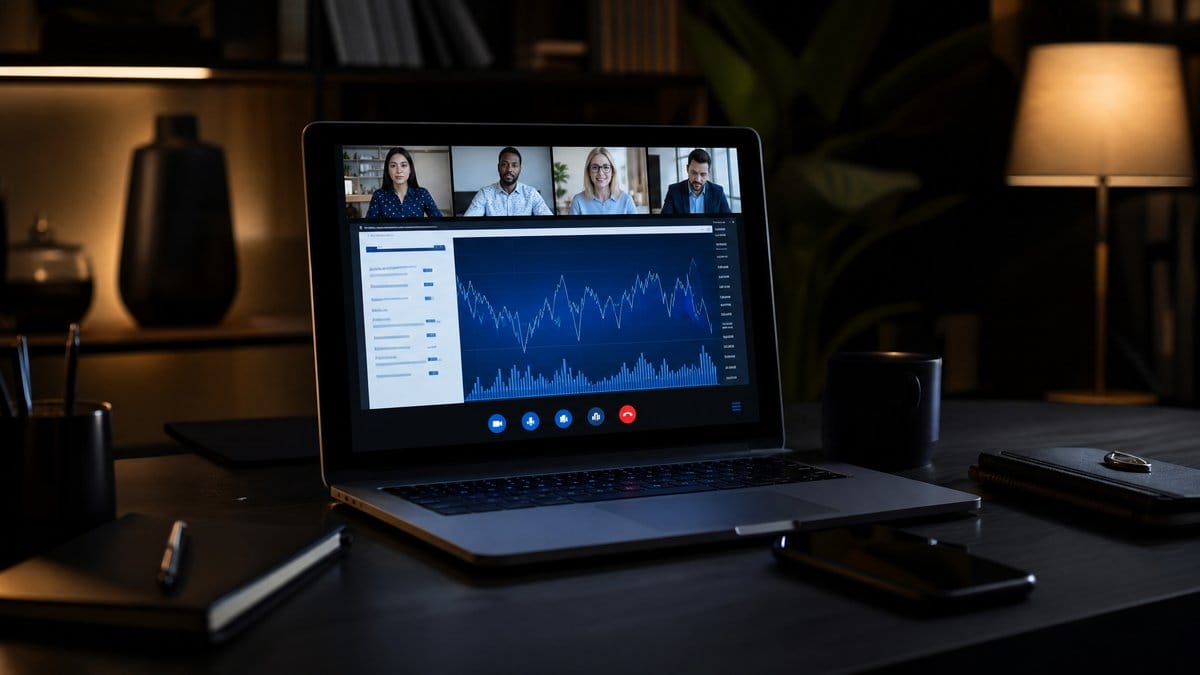
The menu presentation is the core of the F&I process. On a video call, the screen share is your desk. How you manage it determines your success. You must transition from the conversational phase to the presentation phase seamlessly.
Here is the exact sequence:
- The Pre-Deal Scan: Before the call, you do a quick scan. You need the numbers they agreed to and the client survey. You do not need a 10-minute deep dive into their credit profile. Grab the numbers, get on the call.
- The Opening: Establish rapport, confirm the vehicle, and set the agenda. "I want to make sure we get everything finalized accurately so you can get your vehicle. I'm going to share my screen to review the numbers."
- The Base Payment Anchor: Share the screen showing ONLY the base numbers. State the base payment as a fact. "Your base payment is $777." Do not ask for agreement. It is a statement.
- The Upgrade Architecture: Introduce the protections. "Based on what you told me about keeping the car for 5 years and driving 15,000 miles a year, these are the protections that make sense." Walk through the options systematically.
During the screen share, use your mouse cursor as a pointer to guide their eyes. Do not rush. The silence on a video call can feel longer than in person, but you must hold it. Let them process the information. The upgrade architecture works exactly the same way digitally as it does physically, provided you maintain control of the visual information.
Let's dive deeper into the mechanics of the screen share. When you share your screen, you are not just showing a document; you are directing a performance. If you share your entire desktop and they see your email notifications popping up, you have broken their concentration and compromised the professional environment. You must share only the specific application or window containing the menu. This requires technical discipline.
Furthermore, the way you reveal information is critical. In a physical presentation, you might use a pen to point to specific figures. Digitally, your cursor is your pen. Move it deliberately. When you state the base payment, circle it with your cursor. When you introduce a protection, highlight the specific benefit. Do not let your cursor wander aimlessly around the screen, as this creates visual anxiety for the customer. Every movement must be intentional and aligned with your verbal presentation.
Compliance in the Recorded Environment
Look, the regulatory environment in 2026 is unforgiving. With the FTC issuing warning letters to 97 dealer groups and state AGs handing out multi-million dollar penalties, compliance is not a suggestion. It is survival. Remote F&I calls are often recorded, either by the dealership's software or by the customer themselves. This means every word, every disclosure, and every presentation must be flawless.
This is where structural consistency saves you. If your process relies on individual talent or "winging it," you are a massive liability. When you have a standardized installation, compliance happens automatically. You do not have to remember to make the disclosures because the disclosures are built into the sequence.
You must clearly state that the protections are optional. You must clearly present the base payment before presenting the upgraded options. You cannot use assumptive language that implies the protections are required for approval. The objection prevention framework is designed to handle concerns legally and ethically, without resorting to pressure tactics that will get you fined.
The reality is, the recording of remote calls is actually a massive advantage for dealerships that have installed a rigid process. It provides an undeniable audit trail. When a customer claims they were not told a protection was optional, you have the recording proving otherwise. However, this only works if your managers are executing the process with absolute precision. If they are cutting corners, the recording becomes the evidence used against you.
This is why the coaching cadence is so critical. You cannot just train a manager once and expect them to maintain compliance on every call. You must review the recordings. You must identify the variance. You must coach the specific deviations from the process. If a manager fails to clearly anchor the base payment before introducing protections, that is a structural failure that must be corrected immediately. The recording is the game film, and you must review it relentlessly.
Why Remote F&I Yields Higher Penetration
The reality is, when a Tier-1 operator runs a remote F&I process, their numbers go up. Why? Because the variance is removed. In the dealership, there are constant interruptions. The salesperson walks in. The desk calls. The customer's kids are crying. The environment is chaotic.
On a scheduled video call, you have a captive audience. The environment is controlled. The customer is relaxed. If you execute the process with precision, the logic of the protections becomes undeniable. Especially in today's market, where 25% of buyers are carrying $10K+ in negative equity, the need for GAP and VSC is critical. When you present these protections clearly, without the pressure of the dealership environment, the customer makes a logical decision to protect their investment.
This isn't semantic. It's structural. The digital medium forces discipline. You cannot rely on charm or physical presence. You must rely on the process. And the process, when executed correctly, always wins.
Consider the psychology of the modern buyer. They are accustomed to making significant financial decisions online. They buy houses, manage investments, and secure loans through digital interfaces. When they enter a dealership, they are immediately on guard, expecting a high-pressure sales environment. When they are sitting in their own home, looking at a clear, logical presentation on their screen, that defensive posture evaporates. They are more receptive to information, more willing to ask questions, and more likely to see the value in the protections you are offering.
Furthermore, the remote process allows for better pacing. In the dealership, there is often a sense of urgency to "get them out of the box." On a scheduled video call, the time is dedicated. The manager can slow down, ensure comprehension, and build the value of the protections methodically. This deliberate pacing is a key driver of higher penetration rates.
The Role of the Client Survey in Remote F&I
The client survey is not just a piece of paper; it is the diagnostic tool that creates awareness. In a remote setting, its importance is magnified. Because you cannot read the subtle physical cues you might pick up in person, you must rely on the explicit information gathered through the survey.
When conducting the survey remotely, you must be hyper-focused on the customer's responses. If they indicate they drive 20,000 miles a year, that is not just a data point; it is the foundation of your VSC presentation. You must weave that information into your upgrade architecture. "Based on the fact that you are driving 20,000 miles a year, the factory coverage is going to expire in less than two years. That's why this protection is critical for your specific situation."
The survey also helps you identify potential objections before they arise. If they indicate they are extremely budget-conscious, you know you must anchor the base payment firmly and build the value of the protections based on cost avoidance rather than just peace of mind. The survey gives you the blueprint; the process gives you the execution.
Overcoming the "I Just Want to Sign" Objection
One of the most common challenges in remote F&I is the customer who says, "I just want to sign the paperwork and get this over with." This is often a result of a poor transition from sales to F&I. If the salesperson has positioned the remote call as just a formality to collect signatures, the customer's expectations are misaligned.
To overcome this, you must reset the agenda immediately. "I understand you are eager to finalize everything. My job is to make sure all the numbers are accurate, the state documents are correct, and you understand the options available for your vehicle. I'm going to share my screen, and we will walk through this efficiently."
You must project authority and control. If you apologize for taking their time, you have lost. You are providing a valuable service, ensuring their transaction is handled correctly and their investment is protected. The coaching cadence must focus heavily on this opening sequence, as it sets the tone for the entire presentation.
The Future of F&I is Hybrid
The reality is, the dealership of the future will operate on a hybrid model. Some customers will always prefer the in-person experience, but a growing segment will demand the convenience of remote closing. Dealerships that treat remote F&I as an afterthought will be left behind. Those that install a rigorous, disciplined digital process will capture market share and drive unprecedented profitability.
This requires a fundamental shift in identity. F&I managers must see themselves not just as closers, but as digital presentation specialists. They must master the technology, the camera presence, and the precise execution of the Menu Order System in a virtual environment. This is not a skill that is acquired overnight; it requires consistent, focused coaching.
Comparing In-Person vs. Remote F&I Execution
To understand the shift, we need to look at the mechanical differences between the two environments. It is not just a change of location; it is a change in the rules of engagement.
| Execution Element | In-Person F&I | Remote Video F&I |
|---|---|---|
| Environment Control | High (You control the office, the seating, the interruptions) | Shared (Customer is in their environment, you control the screen) |
| Information Flow | Physical documents, printed menus, desk presentation | Screen sharing, digital menus, controlled scrolling |
| Trust Building | Handshakes, body language, physical proximity, eye contact | Camera angle, lighting, audio clarity, digital eye contact |
| Pacing | Natural conversational pauses, reading physical cues | Deliberate pauses, managing digital silence, reading facial expressions |
| Compliance | Relies on memory and physical signatures, harder to audit | Often recorded, requires absolute script adherence, easily audited |
The transition requires a coaching cadence that specifically addresses these digital mechanics. You cannot just tell your team to "do it on Zoom." You must coach the specific actions required to master the digital environment.
Key Takeaways
- Remote F&I is a structural requirement, not a temporary fix, and demands a specific digital architecture.
- Sending documents before presenting them destroys the sequence and surrenders control to the customer.
- Professional camera, lighting, and audio setup are non-negotiable for building digital trust.
- The screen share must be managed meticulously to guide the customer's eyes and maintain the Menu Order System.
- Recorded remote calls require absolute structural consistency to ensure compliance and avoid regulatory penalties.
- When executed with precision, remote F&I often yields higher penetration due to a controlled environment and reduced variance.
- The client survey is a critical diagnostic tool that must be leveraged heavily in the remote environment.
FAQ
Why do my F&I managers struggle to close on video calls?
They struggle because they lose control of the sequence. They often send the menu or the numbers ahead of time, allowing the customer to focus solely on the bottom line before the value of the protections has been established. The process must dictate the flow of information, not the medium.
Do I need special software for remote F&I?
You need secure, compliant video conferencing software with robust screen-sharing capabilities and secure digital signature integration. However, the software is just a tool. The execution discipline of the manager using the tool is what determines the outcome.
How do we handle compliance on recorded video calls?
Compliance on recorded calls requires absolute adherence to a standardized process. Every disclosure must be made clearly, and the base payment must be anchored before any protections are introduced. A rigid, installed process prevents the "winging it" that leads to compliance violations.
Can we still use the client survey effectively on a video call?
Yes, and it is often more effective. Because the customer is in their own environment, their defenses are lower. If you ask the right diagnostic questions and listen actively, the survey will reveal exactly what you need to build your upgrade architecture.
What is the biggest mistake made during the screen share?
The biggest mistake is showing too much information at once. The screen share should be treated like a physical menu presentation. You reveal information sequentially, guiding the customer's focus with your cursor, and never moving forward until the current point is understood.
How do we build rapport without physical presence?
Rapport in a digital environment is built through professionalism and competence. A clear camera angle, crisp audio, deliberate eye contact (looking at the lens), and a structured, respectful process build trust far faster than small talk.
Is remote F&I only for out-of-state buyers?
No. While it is essential for out-of-state buyers, many local, digital-first customers prefer the convenience of closing remotely. Offering a seamless remote option is a competitive advantage that meets the modern consumer where they are.
How do we handle the "I just want to sign" objection remotely?
You must reset the agenda immediately. Project authority and explain that your job is to ensure accuracy and review their options. Do not apologize for taking their time; you are providing a valuable service that protects their investment.
If your dealership is struggling to adapt to the digital F&I environment, or if your remote penetration rates are lagging behind your in-store numbers, it is a process problem, not a people problem. You need an installed system that works regardless of the medium. Contact ASURA Group today to learn how our coaching cadence can install the execution discipline required to dominate remote F&I.