
The $6,400 Reality Check Hitting Your Desk Right Now
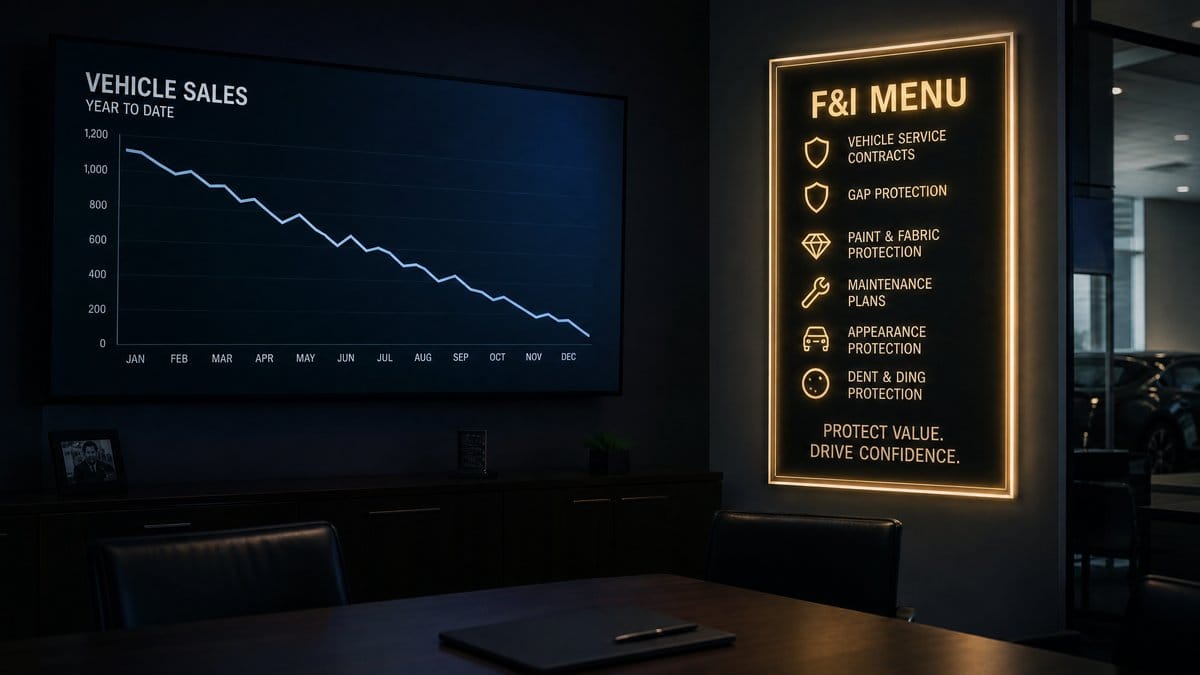
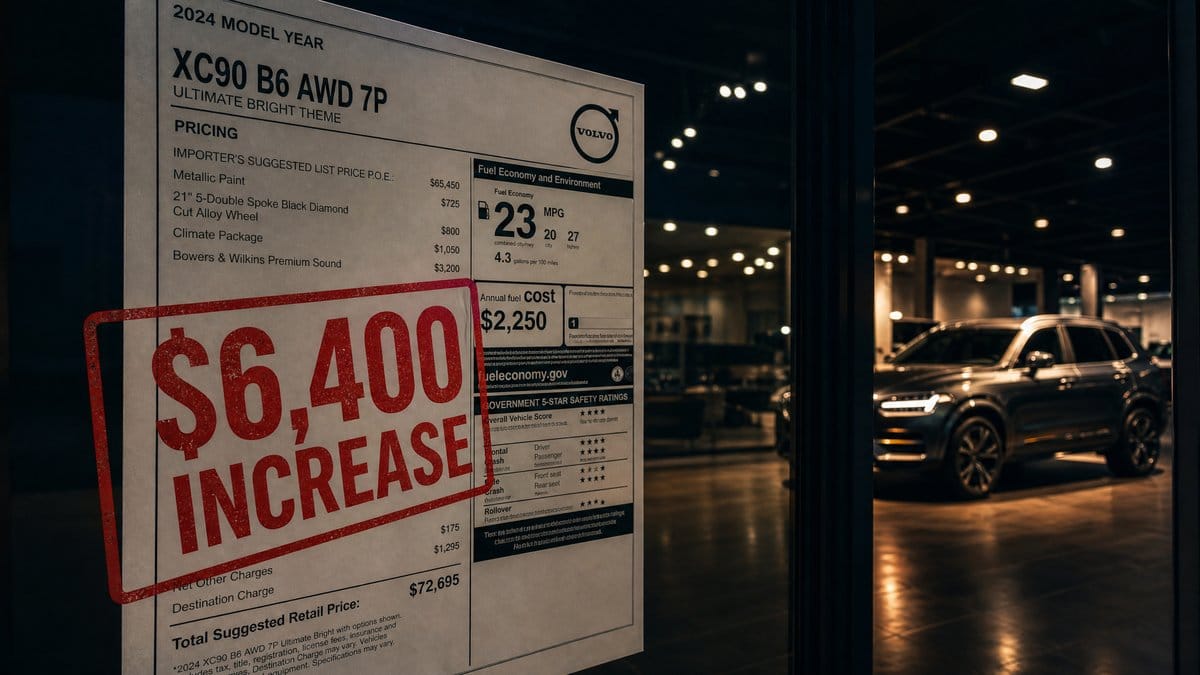
Let's stop pretending the math hasn't changed. If you're sitting in the F&I office right now, you're staring down the barrel of a $6,400 problem on almost every deal you touch. The Budget Lab at Yale and recent KBB data just confirmed what we've been feeling on the floor for months: the new tariff tax has spiked average vehicle prices by 13.5%. That's a $6,400 bump on the average new car, and it's hitting the sub-$40,000 market the hardest. The very buyers who were already stretched thin are now being asked to absorb a massive price hike before you even get a chance to present your menu.
This isn't a future problem. It's a today problem. And if you think you can just run your standard playbook and hope the customer doesn't notice the payment shock, you're going to get slaughtered. I worked with a dealer in Texas last week who watched his PVR drop by $400 in a single month because his team kept trying to sell products the exact same way they did before the tariffs hit. They were presenting $150-a-month product packages to customers who were already hyperventilating over a base payment that was $120 higher than they expected. You can't ignore the elephant in the room. You have to restructure the deal from the ground up.
The days of easy money are over. The customers walking into your office are acutely aware that they are paying more for the exact same piece of metal. And now, with Ford customers literally suing the automaker over tariff refunds—demanding a piece of that $1.3 billion tariff-related benefit—the consumer trust deficit is at an all-time high. They feel like they're getting squeezed, and if you come across as just another guy trying to squeeze them harder, they will shut you down instantly. This is the stuff that separates the pretenders from the producers. You have to change how you structure the deal, how you talk about down payments, and how you present your products.
If you want to survive this affordability crisis, you need to master the base payment anchor. You have to acknowledge the reality of the market, validate their frustration, and then pivot to protection. The $6,400 tariff tax isn't an excuse to miss your numbers; it's the exact reason why your customers need your products more than ever. They are financing more negative equity, taking on longer terms, and exposing themselves to massive risk. Your job is to show them how to mitigate that risk, even when the numbers look ugly.
Restructuring the Deal: The Down Payment Conversation
When the price of the car jumps by $6,400, the down payment conversation has to change immediately. You can no longer accept the standard "I'm putting zero down" without a fight. The math simply doesn't work anymore. If a customer finances that extra $6,400 at 8% over 72 months, they are adding over $110 to their monthly payment just to cover the tariff tax. That's before you even start talking about taxes, fees, or F&I products. You have to get cash into the deal, and you have to do it early.
Last month, one of my clients in Ohio implemented a mandatory cash-down strategy on every deal under $40,000. They stopped asking "How much are you putting down?" and started stating "Based on the current market adjustments, the bank requires $3,000 down to keep your payment in line with your expectations." It's a subtle shift, but it works. You have to frame the down payment not as a dealership request, but as a structural necessity to combat the inflated vehicle cost. When you explain that the $6,400 increase is a market reality, not a dealer markup, customers are more willing to part with their cash to offset the impact.
But what happens when they genuinely don't have the cash? This is where your deal structuring skills are put to the test. You have to look at the trade-in. You have to look at the term. You have to look at the rate. You cannot just submit the deal to your primary lender and pray for an approval. You need to leverage your lender relationships to find the right program that can absorb the inflated LTV. If the car is $6,400 more expensive, the LTV is going to be blown out of the water. You need lenders who understand the tariff impact and are willing to stretch their guidelines.
The down payment conversation is also the perfect time to introduce the concept of equity protection. When a customer is forced to finance an inflated price, they are instantly upside down. This is the reality of the negative equity epidemic. You have to explain that the $6,400 tariff tax is dead money. It doesn't add value to the car; it just adds debt to the loan. If they total the car tomorrow, the insurance company isn't going to reimburse them for the tariff. They are going to pay actual cash value, and the customer is going to be left holding the bag. This is how you pivot from a difficult down payment conversation into a seamless GAP presentation.
The Payment Shock Pivot: Validating and Overcoming
Payment shock is the number one killer of F&I product sales right now. When a customer expects a $500 payment and you hit them with $650, their brain shuts down. They go into defensive mode, and every product you present sounds like an unnecessary luxury. You cannot ignore the payment shock. You have to hit it head-on. You have to validate their frustration before you try to sell them anything.
I tell my F&I managers to use the "Acknowledge and Pivot" framework. When the customer balks at the payment, you say, "I completely understand why that payment feels high. The reality is, the recent $6,400 tariff increase has pushed payments up across the board. It's frustrating, and I know it's not what you expected. But because you're financing a higher amount, the risk to your wallet if something goes wrong is significantly higher. Let me show you how we can protect this investment so you don't get hit with another unexpected bill down the road."
You are taking the blame off the dealership and putting it on the macroeconomic environment. You are aligning yourself with the customer against the common enemy: the tariff tax. This builds trust and lowers their defenses. Once you've validated their concern, you can transition into your menu presentation. But you have to adjust your product mix. If the customer is already stretched to their absolute limit, you can't pitch a $4,000 comprehensive package. You have to focus on the non-negotiables: GAP and a powertrain warranty.
You have to show them the math. If they are complaining about a $120 increase in their monthly payment, ask them how they would handle a $4,000 transmission repair or a $10,000 negative equity bill if the car is totaled. The payment shock is real, but the repair shock is worse. You have to make the cost of the product seem insignificant compared to the cost of the risk. This requires a deep understanding of the customer's financial situation and the ability to articulate the value of protection in a high-risk environment.
The Ford Lawsuit: Navigating Consumer Distrust
The recent class-action lawsuit against Ford is a massive red flag for the entire industry. Customers are suing the automaker, claiming they are owed a share of a $1.3 billion tariff-related benefit. They believe they were overcharged, and they want their money back. This level of consumer distrust is toxic, and it's spilling over into the F&I office. Customers are walking in with their guard up, convinced that the dealership is trying to pull a fast one on them.
You cannot afford to be defensive when a customer brings up the tariffs or the lawsuits. You have to be transparent. If a customer asks why the price of the car is so high, you don't make excuses. You give them the facts. You explain that the tariffs are a federal mandate, not a dealer markup. You show them the KBB data. You show them the Yale study. You prove to them that the $6,400 increase is a market-wide reality, not a localized scam.
This transparency is crucial for building credibility. When you are honest about the ugly realities of the market, customers are more likely to trust you when you recommend a product. You have to position yourself as their financial advisor, not just a salesperson. You are there to help them navigate a difficult market and protect their investment. This is where a seamless turnover from sales to F&I becomes critical. The sales team needs to set the stage, explaining the market conditions and preparing the customer for the reality of the numbers.
If the customer feels like they are being nickel-and-dimed, they will reject everything you offer. You have to elevate the conversation. You have to talk about total cost of ownership, not just the monthly payment. You have to explain that while the upfront cost of the vehicle has increased, the cost of repairs and the risk of negative equity have also skyrocketed. By framing your products as essential risk management tools rather than optional add-ons, you can overcome the distrust and close the deal.
Redefining the Product Presentation for Stretched Buyers
When you are dealing with a customer who is absorbing a $6,400 price increase, your product presentation has to be surgical. You cannot use a shotgun approach and hope something sticks. You have to tailor your pitch to their specific vulnerabilities. The days of the generic 100% menu presentation are over. You need a targeted menu presentation that addresses the unique risks created by the tariff tax.
First, GAP is no longer optional. It is mandatory. With a $6,400 artificial price inflation, every single customer who finances is instantly underwater. You have to hammer this point home. You have to show them the amortization schedule. You have to show them exactly how long it will take for them to build equity in the vehicle. For most buyers, it's going to be 48 to 60 months. That is a massive window of vulnerability. You have to make them feel the weight of that risk.
Second, you have to rethink your VSC presentation. If the customer is stretched thin, they might balk at a comprehensive exclusionary policy. You have to be prepared to step down to a stated component or powertrain policy. Some protection is better than no protection. You have to explain that while the car is more expensive, the parts inside it are also more expensive. The tariffs don't just affect the purchase price; they affect the cost of replacement parts. A $2,000 repair three years ago is a $3,500 repair today. You have to use these numbers to justify the cost of the warranty.
Finally, you have to master the art of the bundle. When a customer is hyper-focused on the payment, you have to show them how bundling products can actually save them money in the long run. You have to use visual aids. You have to draw it out on a piece of paper. You have to show them the cost of the car, the cost of the tariff, the cost of the loan, and the cost of potential repairs. When you lay it all out, the cost of the F&I products becomes a logical necessity, not an emotional burden. This is how you maintain your PVR in a market that is actively trying to destroy it.
Frequently Asked Questions
How exactly does the $6,400 tariff tax impact the average car deal?
The $6,400 tariff tax directly inflates the capitalized cost of the vehicle, which immediately blows out the loan-to-value (LTV) ratio. For the average buyer, this translates to an additional $100 to $130 on their monthly payment, assuming standard interest rates and terms. This artificial price increase creates instant negative equity, making GAP insurance an absolute necessity and forcing F&I managers to restructure deals with larger down payments or extended terms to keep the vehicle affordable.
Why are Ford customers suing over tariff refunds?
Ford customers have filed class-action lawsuits claiming the automaker owes them a share of a $1.3 billion tariff-related benefit. The plaintiffs allege that Ford passed tariff costs onto consumers through higher vehicle prices and destination fees, and now that the company is receiving a massive refund for duties paid, the customers believe they are entitled to recompense. This situation has significantly increased consumer distrust, making transparency in the F&I office more critical than ever.
How should F&I managers handle payment shock caused by the tariffs?
F&I managers must use the "Acknowledge and Pivot" framework. You cannot ignore the payment shock. Validate the customer's frustration by acknowledging that the $6,400 tariff increase has pushed payments higher across the board. Once you align with the customer against the macroeconomic environment, pivot to protection. Explain that because they are financing a higher amount, their financial risk is greater, making products like GAP and VSCs essential for protecting their investment.
What is the best way to ask for a larger down payment in this market?
Stop asking open-ended questions like "How much are you putting down?" Instead, state the requirement as a structural necessity. Say, "Based on the current market adjustments and the $6,400 tariff impact, the bank requires $3,000 down to keep your payment in line with your expectations." Framing the down payment as a lender requirement to combat inflated vehicle costs makes customers more willing to part with cash to offset the impact.
Which F&I products are most critical when vehicle prices spike?
When vehicle prices spike due to tariffs, GAP insurance becomes the most critical product because the artificial price inflation creates massive, instant negative equity. Following GAP, Vehicle Service Contracts (VSCs) are essential. The tariffs not only increase the cost of the car but also the cost of replacement parts, meaning future repairs will be significantly more expensive. Protecting the customer from these inflated repair costs is paramount.
The Psychology of the Stretched Buyer
You have to understand the mindset of the person sitting across from you. When a buyer is hit with a $6,400 tariff tax, they aren't just experiencing financial strain; they are experiencing psychological trauma. They feel like the system is rigged against them. They've spent months researching the perfect vehicle, budgeting for a specific payment, and mentally preparing for the purchase. Then they walk into your dealership and the math completely changes. The vehicle they thought they could afford is suddenly out of reach, or it requires a massive compromise in their monthly budget.
This psychological shift changes everything about how they process information. When people feel financially threatened, their cognitive bandwidth shrinks. They stop listening to logic and start reacting to emotion. If you start throwing numbers, percentages, and complex product descriptions at them, they will shut down. You have to simplify the conversation. You have to speak to their fear of the unknown. The $6,400 tariff tax is a known variable; the unknown variable is what happens when the transmission blows at 60,000 miles and they are already maxed out on their monthly payment.
I see F&I managers make this mistake every single day. They try to logic the customer into buying a VSC. They pull out the brochures, they highlight the covered components, and they talk about the rising cost of labor. But the customer isn't hearing any of it. They are still stuck on the fact that the car costs $6,400 more than it did last year. You have to break through that mental block. You have to say, "I know this payment is higher than you wanted. I know the tariffs have made this a difficult purchase. But my job isn't just to get you financed; my job is to make sure this vehicle doesn't bankrupt you three years from now."
When you frame your role as a protector rather than a salesperson, the dynamic shifts. You are no longer the adversary trying to extract more money from them; you are the ally trying to shield them from future financial ruin. This is the essence of elite F&I performance. It's not about having the slickest word tracks; it's about having the emotional intelligence to read the room and adjust your approach based on the psychological state of the buyer.
Re-evaluating the Trade-In Strategy
The $6,400 tariff tax doesn't just affect the new car side of the deal; it has massive implications for the trade-in. When new car prices spike, used car values typically follow suit, but the correlation isn't always perfect. You have to look at the trade-in not just as a way to lower the capitalized cost, but as a strategic tool to mitigate the impact of the tariffs. If the customer has equity in their trade, you have to maximize it. If they have negative equity, you have a completely different set of problems.
Let's talk about the equity scenario first. If a customer is trading in a vehicle with $5,000 in positive equity, that equity is essentially being wiped out by the $6,400 tariff tax. They are bringing $5,000 to the table, and the price of the new car has increased by $6,400. They are going backward. You have to explain this reality to them. You have to say, "Your trade-in is incredibly valuable right now, but because of the recent tariff increases, that equity is being absorbed by the higher cost of the new vehicle. This means we are essentially starting from zero."
This is a tough conversation, but it's a necessary one. If you don't explain the math, the customer is going to assume that their $5,000 in equity is going to significantly lower their payment. When it doesn't, they are going to blame you. By getting ahead of the issue and explaining how the tariffs are eating their equity, you manage their expectations and prevent the deal from blowing up in the F&I office.
Now let's look at the negative equity scenario. This is where the $6,400 tariff tax becomes a true nightmare. If a customer is rolling $4,000 of negative equity into a deal, and the new car is $6,400 more expensive due to tariffs, you are looking at $10,400 in dead money. That is a catastrophic LTV situation. You cannot just submit that deal and hope for the best. You have to restructure it. You have to look for rebates. You have to look for subvented rates. You have to look for a different vehicle that has more markup to absorb the negative equity.
And most importantly, you have to sell GAP. I cannot stress this enough. If you let a customer roll $10,400 of dead money into a 72-month loan without GAP, you are committing F&I malpractice. You have to show them the amortization schedule. You have to show them that they will be upside down for the entire life of the loan. You have to make them understand that if they total the car, they will be writing a check for $10,000 to the bank. The $6,400 tariff tax makes GAP the most critical product in your arsenal.
The Impact on Lease Penetration
One of the most significant, yet under-discussed, impacts of the $6,400 tariff tax is what it's doing to lease penetration. For years, leasing was the ultimate payment-driven solution. If a customer couldn't afford the finance payment, you flipped them to a lease. But the tariffs have fundamentally altered the leasing math. When the capitalized cost of the vehicle jumps by $6,400, the lease payment spikes dramatically, often making it just as unaffordable as the finance payment.
I was reviewing numbers with a dealer group in Florida last month, and their lease penetration had dropped by 22% since the tariffs hit. The F&I managers were panicking because their go-to strategy for payment-sensitive buyers was no longer working. The residual values haven't adjusted enough to offset the massive increase in the capitalized cost. This means the customer is financing a much larger portion of the vehicle's depreciation over the lease term.
You have to understand how to present a lease in this environment. You can no longer rely solely on the payment advantage. You have to focus on the risk mitigation aspect of leasing. When a customer leases a vehicle, they are insulated from future market volatility. If the tariffs are repealed in two years and used car values plummet, the customer isn't left holding the bag. They simply hand the keys back to the bank. You have to sell the lease as a hedge against macroeconomic uncertainty.
Furthermore, you have to adjust your F&I product presentation for lease customers. If the lease payment is already stretched due to the tariffs, you can't pitch a massive protection package. You have to focus on the essentials: lease wear and tear, and tire and wheel protection. You have to explain that because the vehicle is more expensive, the cost of replacing a damaged wheel or fixing a scratch at the end of the lease is also going to be higher. You have to tie the value of the product directly to the inflated cost of the vehicle.
Training Your Team for the New Reality
You cannot expect your F&I team to navigate this $6,400 tariff tax without specialized training. The old scripts don't work. The old objection handling techniques don't work. The old deal structuring strategies don't work. You have to tear down your existing processes and rebuild them for the current market reality. This requires a commitment to continuous education and a willingness to challenge conventional wisdom.
I recommend implementing a weekly coaching cadence focused specifically on tariff-related objections. You need to role-play the payment shock conversation. You need to role-play the down payment conversation. You need to role-play the Ford lawsuit conversation. Your F&I managers need to be so comfortable talking about the tariffs that it becomes second nature. They need to be able to explain the macroeconomic factors driving the price increases without sounding defensive or apologetic.
You also need to audit your deals more rigorously. You need to look at every deal that gets kicked back by the bank and figure out why. Was the LTV too high? Was the payment-to-income ratio out of line? Did the F&I manager fail to secure a sufficient down payment? You have to identify the structural weaknesses in your deals and address them immediately. The $6,400 tariff tax leaves zero room for error. If your F&I managers are sloppy with their deal structuring, it will cost you thousands of dollars in lost PVR and missed approvals.
Finally, you have to foster a culture of resilience. The F&I office is a high-pressure environment on a good day. When you add a $6,400 price increase and a wave of consumer distrust into the mix, it can become overwhelming. Your F&I managers are going to face more rejection, more hostility, and more frustration than ever before. You have to support them. You have to celebrate the small victories. You have to remind them that they are elite professionals capable of navigating the toughest market conditions. The $6,400 tariff tax is a massive challenge, but it's also a massive opportunity to separate your dealership from the competition.
The Long-Term Play: Building Trust in a Distrustful Market
The Ford lawsuit is just the tip of the iceberg. The $6,400 tariff tax has fundamentally damaged the relationship between the consumer and the automotive industry. Buyers feel like they are being taken advantage of, and they are projecting that frustration onto the dealership. If you want to survive and thrive in this environment, you have to focus on the long-term play: building trust.
Trust is the currency of the F&I office. If the customer trusts you, they will buy your products. If they don't trust you, they won't buy anything, no matter how good your presentation is. In a market defined by high prices and high anxiety, trust is built through transparency, empathy, and expertise. You have to be the calm in the storm. You have to be the financial advisor who helps them navigate the chaos.
This means being honest about the numbers. It means explaining the impact of the tariffs without making excuses. It means validating their frustration and offering real solutions. It means structuring the deal in a way that protects their financial future, even if it means taking a smaller profit on the front end. When you prioritize the customer's long-term financial health over your short-term PVR, you build a relationship that will pay dividends for years to come.
The $6,400 tariff tax is here. It's real, and it's changing everything about how we do business. You can either complain about it, or you can adapt to it. The elite F&I managers—the ones who consistently run $2,500+ PVR regardless of the market conditions—are already adapting. They are restructuring their deals, refining their presentations, and elevating their level of service. They are turning a macroeconomic crisis into a competitive advantage. The question is, are you going to join them, or are you going to get left behind?