

Why Your Best Month Always Fades
Every F&I manager has had that month. The month where everything clicked — the survey was tight, the menu presentations landed, the customers were engaged, and the numbers moved. PRU climbs. Penetration rates jump. It feels like something fundamentally changed.
And then, over the next 30 to 60 days, it doesn't.
The numbers drift back. Not all at once — gradually. The survey gets shorter. The menu presentation gets a little looser. The specific language that was producing results gets replaced with comfortable approximations. Three months after the best month, the manager is doing roughly what they were doing before it, and nobody can quite explain why.
This pattern — peak performance followed by drift back to baseline — shows up in every F&I department that doesn't have a coaching cadence. It doesn't matter how talented the manager is. It doesn't matter how motivated they were after a training event or a strong review. Without a structure that reinforces the specific behaviors that produced the results, the results don't stick.
This is not a performance problem. It is a systems problem.
The best month didn't happen because the manager got lucky or got inspired. It happened because, for a sustained period, they were executing the right behaviors at a higher frequency than usual. Maybe a manager from another store shadowed them. Maybe they just came off a training. Maybe a specific deal unlocked a new understanding of how a part of their process worked. Whatever the trigger, the behavior improved — and the numbers followed.
When the trigger disappears, the behavior reverts. Not because the manager forgot what to do, but because no structure existed to keep them doing it. Behavior without reinforcement drifts. That is not a character flaw — it is how human performance works.
The coaching cadence is what keeps the behavior from drifting. It is the operational structure that turns a great month into a new floor, not a peak.
Across more than 200 stores where ASURA has installed its coaching system, the average PRU increase is $759 per unit. That number isn't produced by training events. It isn't produced by a new menu design or a new software tool. It is produced — and sustained — by a coaching cadence that creates the repetition structure that makes high-performance behavior stick.
What Behavioral Drift Actually Looks Like
Drift doesn't look like failure. That's what makes it dangerous. A manager who is drifting is still working hard. They're still processing deals. They're still hitting the broad strokes of the presentation. From the outside — and often from the inside — nothing looks wrong.
What changes is precision.
The survey gets compressed. Instead of running all eight to ten questions, the manager runs six. Or five. They skip the investment tolerance question because the last three customers seemed hesitant at that point, and it's easier to move on. The survey that was producing genuine awareness in the customer becomes a formality.
The box opening gets relaxed. The three-commitment structure that created trust and eliminated the time objection starts to slide toward "hi, I'm just going to go over some paperwork." Not because the manager forgot the structure — because the urgency to use it precisely has faded. The correct version is still in memory; it's just no longer being retrieved with the same consistency.
The protection language softens. "Product" starts appearing again in sentences where "mechanical protection" or "financial protection" was producing better outcomes. The framing that was lowering resistance becomes the framing that felt natural before the change was installed.
None of these micro-regressions are visible in a single deal. Over 30 to 60 deals, they show up in the numbers — penetration rates drop, PRU slides back toward baseline, and the "great month" starts to look like an anomaly rather than what it actually was: evidence of what's possible when the behaviors are precise.
The drift timeline is almost always the same: two to three weeks of strong performance, four to six weeks of plateau, eight to twelve weeks of reversion. Without intervention, the manager arrives back near baseline within 90 days of their peak. This is the plateau-slide cycle, and it runs like clockwork in departments that don't have a cadence structure to interrupt it.
What the F&I Coaching Cadence Actually Is
The coaching cadence is not a performance review. It is not a monthly check-in with the GM about PRU numbers. It is not a group meeting where everyone hears general feedback. Those things exist in most dealerships. None of them interrupt the drift cycle.
The F&I coaching cadence is a structured, recurring rhythm that operates at three levels — weekly behavioral review, monthly data analysis, and deal-specific debriefs — with one purpose: to keep the specific behaviors that produce results running at the precision level that produces them.
It is the fourth pillar of the ASURA OPS system, and it is the pillar that locks all the others in. The Menu Order System, the Upgrade Architecture, and the Objection Prevention Framework can all be learned and installed. Without the Coaching Cadence, they will drift out of precision within 60 to 90 days, and the manager will be back to their previous performance floor.
With the cadence running, the system stays installed. The behaviors stay precise. The numbers stay up. The best month becomes the baseline that the next great month builds from.
The Architecture of the F&I Coaching Cadence
The Weekly 15-Minute Meeting
The core of the cadence is a 15-minute weekly meeting with a fixed structure. Not a variable-length check-in that stretches to 45 minutes when there's something to discuss. Not a monthly review padded with small talk. Fifteen minutes, same day each week, with three non-negotiable components.
The first five minutes review specific deals — not summary statistics, but specific presentations from the previous week. What was the survey response on this deal? What language was used in the opening? Where did the menu land and why? This isn't a performance evaluation — it's a behavioral reconstruction. The manager needs to articulate exactly what they did so they can see where precision was high and where it slipped.
The second five minutes focus on a single presentation skill with roleplay. Not a broad topic. A single, specific behavior. This week: the GAP deficiency balance question. Next week: the factory warranty anchor. The skill is named, explained in one sentence, and then the manager runs it three times while being observed. Roleplay under observation creates muscle memory in a way that mental review does not. The manager's instincts get trained, not just their knowledge.
The third five minutes set three specific behavioral targets for the coming week. Not goals ("improve penetration rates"). Behaviors ("run all eight survey questions on every deal, including the investment tolerance question"). The specificity of the targets is what makes them actionable — a manager can track whether they did or didn't run a specific survey question in a way they cannot track whether they "improved their survey."
Fifteen minutes. Every week. Non-negotiable. This is the mechanism that prevents drift.
The Monthly Deep-Dive Review
The weekly meeting maintains the behaviors. The monthly review analyzes the patterns those behaviors are producing in the data. These are different conversations with different outputs.
The monthly review pulls three specific datasets: individual protection penetration rates by product type, deal-type performance breakdowns, and declined protection patterns. These three data sets together tell a story that the PRU number alone cannot tell.
Penetration rates by product type reveal where the presentation is working and where it isn't. A manager with high mechanical protection penetration and low financial protection penetration has a specific skill gap in the GAP or financial protection conversation — not a general performance problem. The data points to the behavior that needs work.
Deal-type breakdowns reveal whether performance is consistent across deal types or concentrated in certain configurations. A manager who performs well on cash deals but struggles on heavily financed deals has a specific sequencing issue in the financing conversation — identifiable, addressable, coachable.
Declined protection patterns tell you whether objections are being prevented or managed. If the same objection ("I already have coverage") appears across multiple declined deals, the client survey is not doing its job upstream — the manager is arriving at the menu presentation without the information that would have made that objection irrelevant.
The monthly review also introduces one new skill or technique to develop over the next 30 days. One. Not three. Not a comprehensive overhaul. The cadence builds incrementally — one behavior added per month, maintained by the weekly meeting, compounding over time into a system that runs at elite precision across every element.
Deal-Specific Debriefs
For managers in active performance improvement, or for any deal where the outcome was significantly above or below expectation, a deal-specific debrief captures what happened and why. This is a five-to-ten-minute structured reconstruction of a single deal — the opening sequence, the survey, the menu presentation, and the specific moment where things went well or went sideways.
Deal debriefs serve two purposes. For above-expectation deals, they capture the specific behaviors that produced the result so they can be replicated intentionally rather than accidentally. For below-expectation deals, they identify the specific moment where the process broke down — not to assign blame, but to give the manager the information they need to prevent the same outcome on the next deal.
The most important thing a deal debrief does is make unconscious behavior conscious. Most managers cannot tell you, in precise terms, what they said in their box opening on the last deal they processed. They know roughly what they did. They don't know specifically. The debrief makes them reconstruct it specifically — which is the first step in changing anything that needs to change.
Why Most F&I Environments Will Never Install a Cadence
The cadence is not a complex system. Fifteen minutes per week. Monthly data review. Occasional deal debriefs. The operational investment is minimal. The return — in sustained performance — is the difference between a great month and a permanently elevated floor. And yet, most F&I departments don't have one.
The GM is not an F&I specialist.
In most dealerships, the person responsible for F&I performance is the General Manager — who also manages the sales floor, the service department, the parts operation, and every other revenue center in the building. Even a GM who cares deeply about F&I performance doesn't have the specific F&I coaching expertise to run a behavioral cadence. They can review PRU. They can't reconstruct a specific survey sequence with a manager and identify exactly where the precision slipped.
Performance reviews replace coaching.
Most dealerships have some version of a performance review — monthly numbers, year-over-year comparisons, penetration rates against targets. These are output measurements. They tell you whether the numbers are where they need to be. They do not tell you which specific behaviors produced or failed to produce those numbers, which means they give the manager no actionable information for what to change.
A review that says "your mechanical protection penetration was 34% last month" doesn't help a manager improve. A coaching session that reconstructs three specific deals, identifies that the factory warranty anchor question is being skipped, and runs roleplay on that specific question three times — that helps a manager improve. The difference is the specificity of the behavioral focus.
The short-term pressure runs counter to the cadence.
The dealership environment optimizes for throughput. Deals processed. Units moved. Any activity that isn't directly connected to processing a deal can feel like overhead — even if that activity is the thing that makes every future deal more productive. The 15-minute weekly meeting pays for itself many times over in sustained performance. But in a high-volume environment where the pressure is always on the next deal, carving out 15 minutes per week for behavioral coaching requires a conscious decision to invest in the performance system, not just the performance.
Training events feel like enough.
When an F&I manager attends a two-day training program, a webinar series, or a certification course, there's a perception that something durable has been delivered. Knowledge has been transferred. Skills have been presented. The manager should be better now.
Training events deliver information. The cadence installs behavior. Those are different outcomes, and the difference shows up reliably 60 days after any training event when the performance that improved in week one has drifted back toward baseline because no reinforcement structure was running behind it.
How to Install the Cadence This Week
The coaching cadence is not something that gets built all at once. It gets started — and then it compounds. Here is how to begin.
Step 1: Choose a fixed day and time for the weekly meeting.
The meeting needs to happen on the same day at the same time every week, without negotiation. Variable timing creates variable compliance. "Wednesday at 9 AM" is a structure. "Sometime this week when things are slow" is not. Pick the day. Block it. Protect it.
Step 2: Structure the first meeting around one deal from last week.
Don't try to review everything. Pull one specific deal — ideally one where the outcome was above or below expectation — and reconstruct it in detail. What did the box opening sound like? What survey questions were asked? What language was used at the menu? What happened? The first meeting isn't about evaluating performance; it's about establishing the habit of behavioral reconstruction as the unit of analysis.
Step 3: Name the one skill you'll develop this month.
Identify the single highest-leverage behavioral change available to this manager right now. Is the survey being compressed? Is the box opening missing the third commitment? Is the financial protection language not connecting? Name the specific behavior, explain why it matters, run a three-minute roleplay on it, and make it the target for the next four weekly meetings.
Step 4: Pull the monthly data before the end of the month.
Before the end of the first month, pull the three data sets — penetration by product, deal-type breakdown, declined protection patterns — and review them with the manager in a 30-minute session. Let the data lead the conversation about where the next monthly skill focus should be. The data tells you which behavior to develop next; the monthly review is where that direction gets set.
Step 5: Get coaching that can run the cadence.
The cadence requires someone who can run it — who has been in the box, who understands the ASURA OPS system at the behavioral level, and who can distinguish between a survey that's 80% right and a survey that's producing elite outcomes. If that expertise doesn't exist inside the dealership, the cadence needs to come from outside.
This is the reason ASURA's coaching model is built around cadence, not events. A two-day installation without a cadence produces a two-week improvement. A coaching cadence produces a permanent performance elevation that compounds as each new behavior is added to the system and maintained. The $759 average PRU increase across coached stores isn't a snapshot — it's a sustained number that exists because the cadence keeps the system running at the precision level that produces it.
Frequently Asked Questions
What is an F&I coaching cadence?
An F&I coaching cadence is a structured, recurring rhythm of behavioral review and skill development designed to sustain and improve F&I performance over time. The core structure includes a 15-minute weekly meeting focused on specific deal reconstruction and one-skill roleplay, a monthly data review analyzing penetration rates and declined protection patterns, and occasional deal-specific debriefs for above- or below-expectation outcomes. The cadence prevents performance drift and compounds performance improvement over months and years.
Why does F&I performance fade after a training event?
Training events deliver information — they don't install behavior. When a manager returns from a training program, they have new knowledge but no reinforcement structure to turn that knowledge into automatic behavior. Without reinforcement, behavior defaults to what was already automatic — the patterns the manager had before the training. This is why performance typically improves in the two weeks after a training event and then drifts back toward baseline over the following 60 days. The cadence is the structure that prevents that drift.
How long should the weekly F&I coaching meeting run?
Fifteen minutes, with a fixed three-part structure: five minutes on specific deal reconstruction from the previous week, five minutes on one-skill roleplay, and five minutes setting three specific behavioral targets for the coming week. The 15-minute limit is not a suggestion — it's a design feature. A meeting that runs to 30 or 45 minutes becomes a variable investment that managers stop protecting. A 15-minute meeting that is fixed and structured gets protected because the cost is minimal and the return is visible.
What data should a monthly F&I coaching review include?
The monthly review should pull three specific data sets: individual protection penetration rates by product type (not combined), deal-type performance breakdowns (cash, finance, lease, subprime), and declined protection patterns. These three data sets together reveal the specific behavioral gaps that the next month's skill development should address. PRU as a standalone number tells you the output — these three data sets tell you the input behaviors that produced it and which specific inputs need to change.
What is the plateau-slide cycle in F&I?
The plateau-slide cycle is the pattern of peak performance followed by drift back toward baseline that occurs in F&I departments without a coaching cadence. It typically runs on a 90-to-120-day cycle: a trigger event (training, inspection, strong month) produces improved behavior, the behavior sustains for two to six weeks without reinforcement, then gradually reverts to the pre-trigger baseline as the specific precision of each behavior element degrades. The cadence interrupts this cycle by providing consistent reinforcement that keeps precision high.
How is F&I coaching different from management?
Management tracks outputs — numbers, penetration rates, PRU against target. Coaching works at the behavioral level — the specific sequence of actions that produce those outputs. A manager who reviews monthly PRU and gives general feedback is doing management. A coach who reconstructs specific deals, identifies the exact moment where the survey compressed or the protection language softened, and runs three-minute roleplay on the specific behavior that needs correction is doing coaching. Both are necessary. Neither replaces the other.
Can an F&I director run the coaching cadence across multiple stores?
Yes, with structure. An F&I director managing four to six stores can run the weekly cadence across all stores by staggering the 15-minute meetings across the week — Monday and Tuesday for stores one and two, Wednesday and Thursday for stores three and four, and so on. The monthly data review can be batched across two to three days at month-end. The limiting factor is not time — 15 minutes per manager per week is a manageable investment — but coaching expertise. Running an effective behavioral cadence requires specific F&I experience and the ability to distinguish precision from approximation in a presentation.
What results should an F&I manager expect from a coaching cadence?
Managers who fully install the coaching cadence — running the weekly meeting consistently, executing the monthly data review, and actively working the targeted skill each week — typically see measurable PRU movement within 30 to 60 days. Across ASURA-coached stores, the average PRU gain is $759 per unit, sustained over time rather than appearing as a one-time spike. The cadence is what makes the difference between a short-term improvement and a permanent elevation in the production floor.
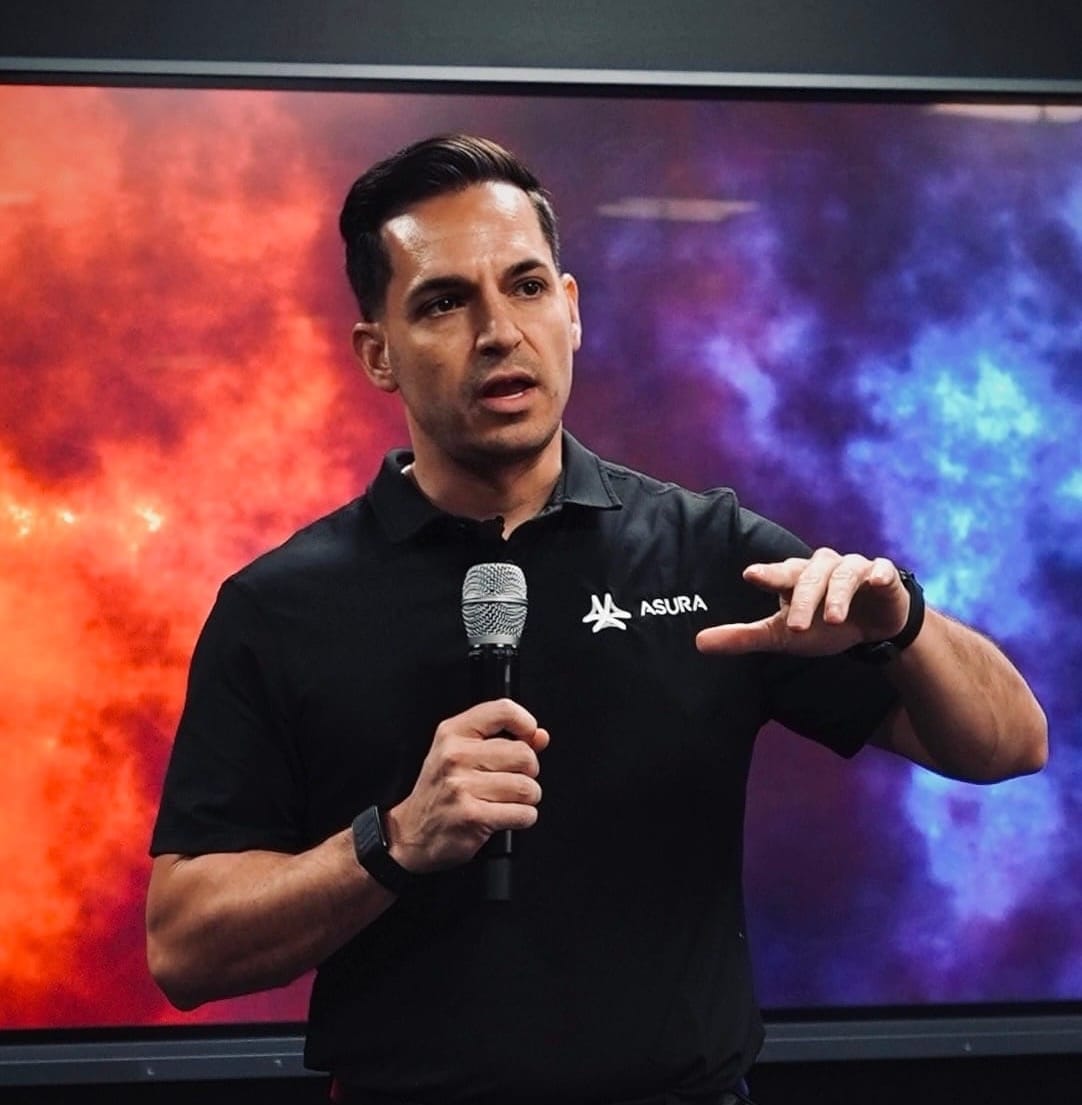
Adrian Anania is the VP of Performance and Operations at ASURA Group. He has coached F&I managers and directors at more than 200 franchised dealerships nationwide, generating over $200 million in found revenue for his clients. The coaching cadence is the fourth pillar of ASURA OPS — and the one that keeps all the others running.