
The 400% Shift You're Ignoring
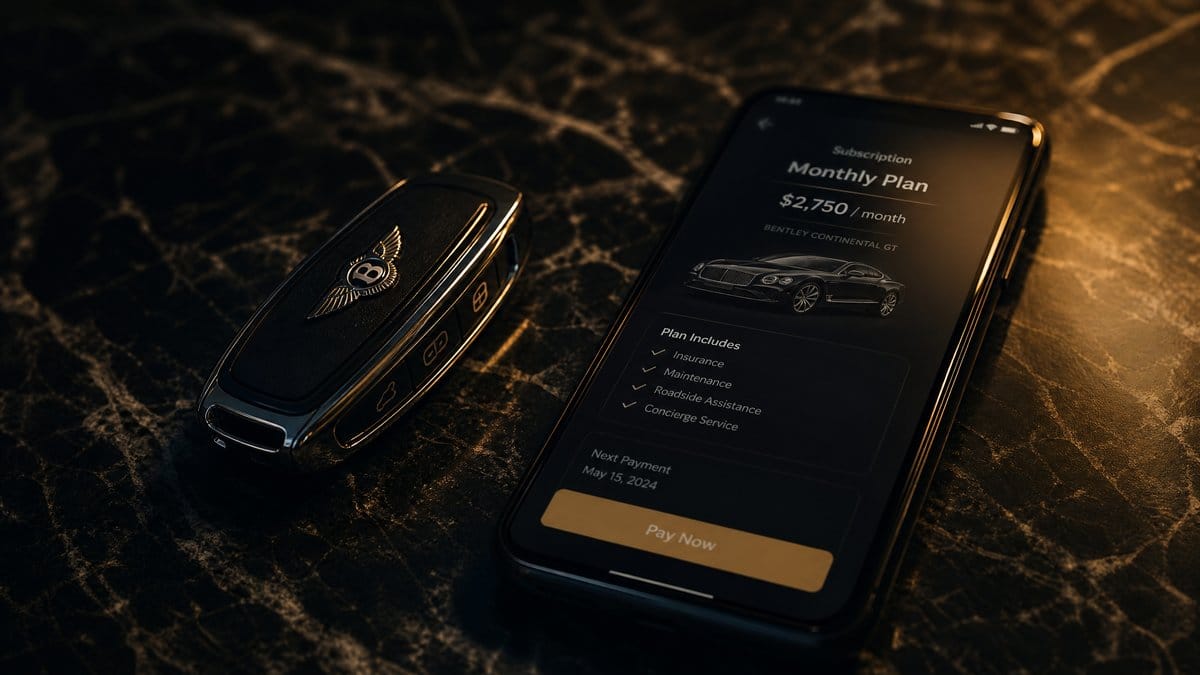
If you think the way we sell F&I products is immune to the massive shifts happening in every other industry, you're lying to yourself. Since 2012, the subscription economy has grown by 400%. We watched software companies move from selling perpetual licenses on CDs to charging monthly SaaS fees. We watched entertainment move from buying DVDs to streaming subscriptions. We watched fitness move from buying gym equipment to paying monthly for connected bikes and classes. And now, we are watching the exact same shift come for the automotive industry, specifically vehicle protection products. The days of assuming every customer wants to finance a five-year service contract into their loan are rapidly coming to an end, and the dealers who refuse to see the writing on the wall are going to get crushed by the ones who do.
I see F&I managers every day who are still pitching one-time, upfront vehicle service contracts and prepaid maintenance plans like it's 2015. They think the OEM monthly protection plans and third-party subscription services are just a fad. They aren't. They are a fundamental restructuring of how consumers want to buy and pay for peace of mind. If you don't understand how this is going to change your revenue structure, you are going to be left behind, wondering why your PVR is dropping while the guy down the street is building a recurring revenue empire. The subscription model is not a trend; it is a permanent shift in consumer behavior that has finally reached the dealership floor.
This isn't a theory. I worked with a dealer group in Texas last month that saw a 15% drop in traditional VSC penetration over the last two years. When we dug into the data, it wasn't because their F&I team forgot how to sell. It wasn't because their product was inferior. It was because their customers were opting into the manufacturer's monthly subscription plan through the app after they left the dealership. The dealer got cut out of the transaction entirely. That is the reality we are facing. The subscription model is coming for F&I, and you need a strategy to adapt before the manufacturers disintermediate you completely.
Think about the psychology of the modern consumer. They are conditioned to pay for access, not ownership. They don't want to own a movie; they want access to Netflix. They don't want to own a server; they want access to AWS. When they sit in your office, they don't necessarily want to own a $3,500 service contract. They want access to peace of mind, and they want to pay for it in a way that aligns with how they pay for everything else in their life. If you force them into a binary choice—buy this massive upfront product or take all the risk yourself—you are going to lose a significant percentage of them to the subscription alternatives that are waiting for them on their smartphones.
The numbers don't lie. The subscription economy is projected to reach $1.5 trillion by 2025. That money is coming from somewhere, and a growing chunk of it is coming from automotive. We are seeing startups raising hundreds of millions of dollars to build direct-to-consumer vehicle protection subscriptions. We are seeing OEMs integrating subscription offers directly into the infotainment screens of new vehicles. The infrastructure for this shift is already built, and it is being deployed at scale. If your F&I department is still operating on a purely transactional model, you are bringing a knife to a gunfight.
Why Consumers Are Demanding Subscriptions
To understand how to adapt, you have to understand why the shift is happening. It comes down to two things: affordability and flexibility. The average transaction price of a new vehicle is hovering around $47,000. Interest rates are higher than they've been in a decade. Consumers are stretched thin. When you sit them down in the box and try to add $3,500 worth of protection products to the amount financed, you are hitting a wall of affordability. They look at the monthly payment increase and they balk. They aren't rejecting the value of the product; they are rejecting the financial structure of the transaction.
Subscriptions change the psychology of the purchase. Instead of financing a $2,500 VSC over 72 months and paying interest on it, the consumer pays $40 a month. It feels like a utility bill, not a massive debt obligation. It's the same reason people don't think twice about paying $15 a month for Netflix but would hesitate to drop $1,000 on a massive DVD collection. The barrier to entry is significantly lower. When you remove the friction of a large upfront commitment, you dramatically increase the likelihood of a yes. This is basic behavioral economics, and it applies just as much to F&I as it does to streaming services.
Furthermore, subscriptions offer flexibility. Traditional F&I products lock the consumer in. If they trade the car in three years, they have to deal with cancellations and prorated refunds. It's a hassle. With a subscription, they can cancel anytime. This appeals to the modern consumer who values optionality over ownership. They don't want to be tied down. If you are only offering rigid, long-term contracts, you are fighting against the current of consumer preference. You are asking them to make a five-year commitment in a world where they are used to making month-to-month decisions.
Let's look at a real-world scenario. A customer comes in to buy a used SUV. They have a strict budget of $450 a month. The car payment alone is $430. You have $20 of room to work with. In the traditional model, you are dead in the water. You can't fit a VSC, GAP, and tire and wheel into $20 a month. But in a subscription model, you can offer them a comprehensive protection package for $49 a month, billed directly to their credit card, completely separate from the auto loan. Suddenly, you have a deal. You have provided the protection they need in a format they can afford.
This flexibility also extends to the coverage itself. Subscription models often allow consumers to toggle coverage on and off, or upgrade and downgrade their plans based on their changing needs. If they are taking a cross-country road trip, they might upgrade to a premium tier for a month. If they are working from home and barely driving, they might downgrade to a basic tier. This level of customization is impossible with traditional financed products, but it is exactly what consumers expect in the subscription economy. If you can't provide it, someone else will.
The Threat to Traditional F&I Revenue
The threat here is obvious. If consumers shift from buying upfront products to monthly subscriptions, the traditional F&I revenue model breaks. Right now, you sell a VSC, the dealership gets a massive upfront commission, and you get paid your percentage. It's a transactional model. You kill what you eat that day. It's a system built on immediate gratification and large cash infusions. But what happens when that cash infusion turns into a trickle of monthly payments?
In a subscription model, the revenue is spread out over time. It's recurring. If the OEM sells the subscription directly to the consumer through the connected car app, the dealership gets nothing. Zero. You did all the work to sell the car, you facilitated the test drive, you handled the financing, and the manufacturer reaps the recurring revenue for the next five years. This is the exact scenario I warned about when discussing the F&I performance process problem. If your process doesn't account for these external threats, your process is broken. You are essentially acting as an unpaid lead generator for the OEM's subscription business.
Even if the dealership offers its own subscription products, the compensation structure for the F&I manager has to change. You can't pay a guy a massive upfront commission on a product that only generates $40 a month in revenue. The cash flow doesn't support it. This means F&I pay plans will have to evolve to include recurring commission structures or bonuses based on subscription retention. If you are an F&I director, you need to start thinking about how to structure pay plans that incentivize growth in a recurring revenue environment. You have to figure out how to keep your top performers motivated when the immediate payout is smaller, but the long-term potential is massive.
This transition is going to be painful for a lot of dealerships. The ones who are highly leveraged and rely on massive F&I back-end gross to keep the lights on are going to struggle. They are going to resist the subscription model because it hurts their immediate cash flow, even if it's better for the consumer and better for the long-term health of the business. This resistance is a fatal mistake. You cannot fight consumer demand and win. If you refuse to offer subscriptions, your customers will simply buy them elsewhere, and you will lose the revenue entirely.
The dealerships that survive this transition will be the ones that view subscriptions not as a threat, but as an opportunity to build a more stable, predictable, and valuable business. Recurring revenue is the holy grail of modern business. It smooths out the peaks and valleys of the automotive cycle. It increases the valuation of the dealership. But getting there requires a fundamental rewiring of how you think about F&I, how you compensate your team, and how you measure success.
Adapting with Hybrid Models
So, how do you survive this shift? You don't abandon the traditional model entirely, but you can't rely on it exclusively. You have to offer a hybrid model. You need to give the consumer the choice between the traditional financed product and a monthly subscription option. You have to become a financial advisor, not just a product pusher. You have to analyze the customer's situation and present the option that makes the most sense for them.
Here is how this looks in practice. You present the menu just like you always do. You build value in the VSC, the GAP, the tire and wheel. You assume the sale on the traditional financed products. But if the customer objects based on the total cost or the increase in the monthly payment, you don't just drop the product and move on. You don't just cut the price and destroy your margin. You pivot to the subscription option. "I understand that adding $40 to your car payment isn't ideal right now. What if we set this up on a month-to-month basis? It's $45 a month, it's not tied to your loan, and you can cancel it anytime."
This is a powerful objection handling technique. You are removing the commitment and the debt obligation. You are meeting the consumer where they are. Yes, the upfront gross is lower, but you are capturing revenue that you otherwise would have lost completely. And more importantly, you are keeping the customer tied to the dealership rather than losing them to the OEM's app. This requires a 100 percent menu presentation rate, because you have to present the options to every single customer to find out which model fits their needs. You cannot pre-qualify who will want a subscription and who will want a financed product.
The hybrid model also allows you to capture customers who are paying cash or bringing their own financing. These customers are notoriously difficult to sell traditional F&I products to because they don't want to increase their out-of-pocket expense or mess with their pre-approved loan structure. But a subscription product is a completely separate transaction. It's a simple credit card swipe. It removes all the friction from the cash or outside lienholder deal. If you aren't offering subscriptions to these customers, you are leaving massive amounts of money on the table.
Implementing a hybrid model requires discipline. Your F&I managers cannot use the subscription option as a crutch. They cannot default to it just because it's an easier sell. The traditional financed product is still the most profitable option for the dealership in the short term, and it should always be the primary goal. The subscription is the safety net. It's the alternative you offer when the traditional deal is dead. Managing this dynamic requires strong leadership and constant monitoring of presentation rates and product mix.
Building a Recurring Revenue Engine
The dealerships that win in the next decade will be the ones that figure out how to build a recurring revenue engine. They will stop looking at F&I as a one-time transaction and start looking at it as the beginning of a long-term financial relationship with the customer. They will view the F&I office not just as a profit center, but as a customer retention engine.
This requires a massive shift in mindset. You have to start tracking different metrics. Instead of just looking at PVR and product penetration, you need to look at subscription attach rates, churn rates, and lifetime customer value. You need to know exactly how long the average customer keeps their subscription active. You need to know the cost of acquiring a subscription customer versus the lifetime revenue they generate. These are SaaS metrics, and you need to learn how to use them if you want to compete in the subscription economy.
You also need to have a process for managing the subscription lifecycle. What happens when a customer's credit card expires? What happens when they try to cancel? You need a dedicated team or an automated system to handle billing failures and retention efforts. You need to follow up with customers who cancel to find out why and try to win them back. You need to integrate the subscription billing seamlessly with your DMS and CRM so you have a single view of the customer's relationship with the dealership. This is where a 90-day F&I process audit becomes critical to ensure your systems are actually supporting your strategy.
Furthermore, you need to leverage the data generated by the subscription model. When a customer is paying you every month, you have an ongoing touchpoint. You know when they are using the product. You know when they are approaching the end of their coverage. You can use this data to trigger targeted marketing campaigns. If a customer has been paying for a VSC subscription for three years and their car is approaching 60,000 miles, that is the perfect time to reach out with a trade-in offer. The subscription becomes a bridge to the next vehicle sale.
Building a recurring revenue engine is not easy. It requires investment in technology, training, and process redesign. It requires a willingness to sacrifice some short-term profit for long-term stability. But the payoff is massive. Dealerships with strong recurring revenue streams command higher multiples when they sell. They are more resilient during economic downturns. They have deeper, more profitable relationships with their customers. This is the future of automotive retail, and the F&I department is at the center of it.
Training for the Subscription Sale
You cannot just drop a subscription product on your menu and expect your F&I managers to know how to sell it. It requires a completely different skill set and a different set of word tracks. Selling a traditional VSC is about building value in the coverage and justifying the increase in the monthly loan payment. Selling a subscription is about emphasizing convenience, flexibility, and low barrier to entry.
Your F&I managers need to understand the nuances of the subscription pitch. They need to know how to position it as a utility rather than a debt. They need to know how to handle objections related to recurring charges. "I don't want another monthly bill." How do your managers respond to that? If they don't have a rehearsed, effective response, they are going to lose the sale. They need to be able to say, "I completely understand. The beauty of this program is that it's not a bill you are locked into for five years. It's a service you can turn on and off as you need it, just like your Netflix account. If you decide next month you don't want the coverage, you cancel it. No hassle, no prorated refunds. It puts you in complete control."
This requires rigorous roleplaying. You need to put your managers in uncomfortable situations and force them to practice the pivot from the traditional product to the subscription. You need to record these roleplays and review them. You need to build a library of best practices and successful word tracks. If you are not actively training your team on how to sell in the subscription economy, you are setting them up for failure. You need a coaching cadence system to ensure your team is executing the new strategy flawlessly.
Furthermore, your training needs to cover the operational aspects of the subscription model. Your managers need to know how to process the transaction, how to set up the recurring billing, and how to explain the cancellation policy to the customer. If the process is clunky or confusing, the customer will back out. The transaction needs to be as seamless as signing up for a Spotify account. This requires deep familiarity with the technology platform you are using to manage the subscriptions.
Finally, you need to train your team on the ethics of subscription sales. There can be no ambiguity about what the customer is signing up for. They need to clearly understand the monthly cost, the billing cycle, and the cancellation process. If you try to sneak a subscription past a customer or make it difficult for them to cancel, you will destroy your dealership's reputation and invite regulatory scrutiny. Transparency is non-negotiable in the subscription economy.
The OEM Threat and How to Counter It
Let's talk about the elephant in the room: the OEMs. The manufacturers are not stupid. They see the massive margins in vehicle protection products, and they see the shift toward subscriptions. They are actively building direct-to-consumer subscription platforms that bypass the dealership entirely. They are using the connected car data to market these products directly to the consumer's smartphone or infotainment screen.
This is an existential threat to the F&I department. If the OEM can sell a VSC subscription directly to the consumer for $40 a month, why would the consumer buy a $3,500 financed product from you? The answer is, they won't. If you do not have a competitive subscription offering, you will lose this business to the manufacturer. It is that simple.
So, how do you counter the OEM threat? First, you have to beat them to the punch. You have to present your subscription offering in the F&I office before the customer ever sees the OEM's offer on their app. You have the advantage of the in-person relationship. You have the opportunity to build trust and explain the value of the product face-to-face. If you execute a seamless turnover from sales to F&I, you have a captive audience. Use that advantage.
Second, you have to offer a superior product. The OEM subscriptions are often rigid and tied specifically to their brand. If you partner with a strong third-party provider, you can offer a subscription that covers multiple vehicles in the household, or includes additional benefits like key replacement or dent repair that the OEM doesn't offer. You have to differentiate your product based on value, not just price.
Third, you have to leverage your service department. The biggest advantage the dealership has over the OEM is the physical service lane. When you sell a subscription, you need to tie it directly to your service department. You need to make it incredibly easy for the customer to use their subscription at your dealership. If you provide a frictionless claims experience, the customer will remain loyal to your subscription program, even if the OEM bombards them with competing offers.
The Future is Now
The subscription model isn't some distant future concept. It is happening right now. The OEMs are already rolling out their connected car subscriptions. Third-party providers are launching dealer-branded subscription platforms. The consumers are already conditioned to buy this way. The infrastructure is in place, the demand is real, and the shift is accelerating.
You have a choice. You can bury your head in the sand, keep pitching the same old products the same old way, and watch your revenue slowly bleed out to the manufacturers and the disruptors. You can complain about how the business is changing and long for the good old days. Or, you can adapt. You can embrace the hybrid model, start building a recurring revenue engine, and position your dealership for long-term success in the subscription economy.
This is the stuff that separates the pretenders from the producers. The pretenders complain about the market. The producers dominate it. The pretenders cling to outdated models. The producers innovate and adapt. The subscription model is coming for F&I. It is going to change your revenue structure, your pay plans, and your entire approach to the business. The only question is whether you are going to lead the change or be a victim of it. Which one are you going to be?
Frequently Asked Questions
What is the subscription model in F&I?
The subscription model in F&I refers to offering vehicle protection products, such as vehicle service contracts or prepaid maintenance, on a month-to-month billing basis rather than as a single upfront purchase financed into the vehicle loan. This mirrors the SaaS (Software as a Service) model, providing consumers with a lower barrier to entry and the flexibility to cancel anytime, while creating recurring revenue streams for the provider.
Why are consumers preferring vehicle protection subscriptions?
Consumers prefer vehicle protection subscriptions primarily due to affordability and flexibility. With high vehicle prices and interest rates, adding thousands of dollars to a loan is difficult for many buyers. Subscriptions offer a low monthly payment that isn't tied to the loan, avoiding interest charges. Additionally, the ability to cancel anytime appeals to modern consumers who dislike long-term commitments and want optionality.
How does the subscription model threaten traditional dealership revenue?
The subscription model threatens traditional dealership revenue by shifting the point of sale away from the F&I office. If consumers opt into OEM-provided subscriptions through connected car apps after the sale, the dealership loses the upfront commission and the ongoing revenue. Furthermore, even if the dealer sells the subscription, the transition from large upfront commissions to small recurring payments disrupts traditional F&I pay plans and cash flow.
How can dealerships adapt to the subscription economy?
Dealerships can adapt by implementing a hybrid model. This involves presenting traditional financed F&I products first, but pivoting to a month-to-month subscription option if the customer objects to the total cost or loan increase. Dealerships must also partner with providers that offer dealer-branded subscription platforms, ensuring the recurring revenue stays with the dealership rather than going to the manufacturer.
How will F&I pay plans change with subscription products?
F&I pay plans will need to evolve to account for recurring revenue. Since dealerships cannot pay large upfront commissions on products that only generate small monthly fees, compensation structures will likely shift to include smaller upfront bonuses combined with recurring commissions based on the active life of the subscription, or bonuses tied to overall subscription portfolio growth and retention metrics.