
If you've spent any time in the F&I office, you've heard the same objections on repeat. You've probably been trained to handle them. You've got your rebuttal scripts. You know the feel-felt-found technique. You've watched the YouTube videos.
None of that fixes the real problem.
The real problem is that you're fighting a battle that never needed to happen. Every voiced objection is evidence of a process gap — a moment earlier in the deal where the foundation wasn't laid correctly. By the time a customer says "I need to think about it," you've already lost the window to prevent it. Now you're in damage control.
That's not where F&I Client Survey win.
The managers generating $1,800, $2,200, $2,500 PRU consistently — they're not better at rebuttals. They're building a process so tight that objections don't have room to form. That's what the ASURA Objection Prevention Framework is built to do.
Why Objections Happen in F&I
Objections are a symptom. The disease is a broken process.
When a customer objects in your office, it means one of three things happened upstream:
- They weren't prepared for the F&I process at all
- They weren't given enough context to make a decision confidently
- Their trust in the transaction got broken somewhere between the sales floor and your desk
None of those are rebuttal problems. They're process problems.
Most F&I training treats objections as inevitable — something you manage after they appear. That approach keeps managers stuck. You can't coach someone out of a process failure with a better word track. You fix it by changing what happens before the objection has a chance to form.
The Trust Transfer Problem
Every deal arrives at your desk with some level of trust in the transaction. A good salesperson builds real rapport, the customer is excited about the vehicle, and they walk into your office in a good mental state.
Then one of three things happens: the turnover is botched, the box opening is clumsy, or the survey is skipped. Each of those breaks the trust transfer and puts the customer into a defensive posture.
A defensive customer objects. A bought-in customer asks questions.
The difference between those two states isn't the customer — it's the process.
The 3 Most Common F&I Objections (And the Process Failure Behind Each)
Objection 1: "I Need to Think About It"
The process failure: No speed commitment was made at the start of the interaction.
This objection is about time and pressure. The customer doesn't feel safe making a decision in the room, so they defer. They want to leave and process without the perceived pressure of someone sitting across from them.
This objection doesn't appear when the customer already committed to a fast interaction at the start. The box opening solves this — but only if it's delivered correctly.
When you open with "Complete state and federal documents, review your warranty, and get you out as quickly as possible — which is why we developed this quick client survey to speed everything up," you've made a speed commitment. The customer is now expecting a quick, organized process. The psychological frame has shifted from "sales encounter" to "administrative completion."
When "I need to think about it" appears, it almost always means the box opening was weak, absent, or didn't actually communicate speed. The customer never got the frame. So they defaulted to self-protection.
Prevention: Deliver the box opening verbatim. Mean it. Move with purpose. The customer should never question whether this is going to take an hour.
Objection 2: "I Already Have Coverage"
The process failure: The survey wasn't used to create situational awareness.
This is the most mishandled objection in F&I. Most managers either try to discredit the existing coverage or pivot to a comparison — both of which create friction.
But here's the reality: "I already have coverage" means the customer doesn't understand that what you're offering is different from what they have. They've collapsed multiple distinct products into one mental category called "coverage" — and they believe they've already checked that box.
That confusion is on you. Not because you didn't explain it well enough during the presentation — but because the survey didn't do its job of creating problem awareness before the presentation started.
The F&I client survey isn't a data collection tool. It's a situational awareness tool. When executed correctly, the customer arrives at the product conversation already aware of the gaps in their current coverage. They've thought it through. They've identified the scenarios where they'd be exposed. That mental work happens before you show them a single product.
When they haven't done that mental work, "I already have coverage" is their default. They're not lying — they genuinely believe it. The survey was the tool to shift that belief, and it was either skipped or rushed.
Prevention: Run the survey. Take your time on the questions that reveal exposure gaps. Let the customer work through the scenarios without interruption. By the time you get to the menu, "I already have coverage" has no foothold.
Objection 3: "I Can't Afford It"
The process failure: Payment wasn't anchored correctly during the box opening.
This objection shows up in two forms: genuine budget constraint and perceived affordability. The second is far more common — and it's entirely preventable.
When a customer says "I can't afford it," they're often responding to sticker shock — the sense that adding products is going to blow up their payment. That perception forms when the base payment hasn't been clearly established and owned.
The box opening sequence — after the speed/survey introduction — includes a review of the base payment as a statement, not a question. "Your base payment is $487 per month." Not "Do you know what your payment is?" Not "Your payment came in at..." — declarative, confident, complete.
This matters because it transfers the trust of the sale into your office. The customer walks in knowing the number, owning it, and confident in it. When you then show them upgrade options, they're evaluating additions to a known number — not worrying whether the whole thing is going to fall apart.
When the base payment step is skipped or delivered weakly, the customer never has an anchor. Everything feels uncertain. "I can't afford it" is their escape from uncertainty.
Prevention: After the survey, review the base payment as a statement. Pause. Let them sit with it. Then proceed. That five-second pause is worth hundreds of dollars in PRU.
The ASURA OPS System, Objection Prevention System
The ASURA OPS Objection Prevention System isn't a rebuttal system. It's a construction sequence.
The framework is built on a simple premise: objections form in predictable windows. Close those windows before the customer reaches them and objections don't appear. Leave them open and you spend your days doing verbal judo.
The framework operates across four pressure points:
1. [The Turnover Handoff](/blog/seamless-turnover-sales-fi-handoff)
Trust is transferred (or broken) the moment the salesperson hands the customer to you. A weak turnover creates a suspicious customer. A strong turnover creates a receptive one.
The F&I manager's credibility doesn't begin in the box — it begins in the showroom. When the salesperson introduces you as a specialist who handles the "official" part of the transaction, and when that introduction is warm and confident, the customer arrives in your office already oriented toward compliance. The wall hasn't been built.
When the salesperson says "now you just have to go talk to finance" — or worse, "I'll let them explain the rest" — the customer's guard goes up. They've been handed off, not introduced. That's a different psychological state.
The OPF requirement: F&I managers must communicate with the sales team about the quality of introductions. This isn't optional. A bad turnover costs you $300–$500 in every deal it touches.
2. The Box Opening Sequence
The box opening is your first tool of prevention. It does three things simultaneously:
- Removes time pressure (speed commitment)
- Establishes administrative authority (state and federal documents, review your warranty)
- Creates an anchor for the base payment
Recite it exactly: "Complete state and federal documents, review your warranty, and get you out as quickly as possible — which is why we developed this quick client survey to speed everything up."
Notice what's missing from that language: no mention of "products," no mention of "selling," no mention of "coverage." The frame is completion, not sales. That distinction is the difference between a defensive customer and a cooperative one.
After the opening: confirm title spelling, confirm address or PO Box, review base payment as a statement. Three steps. Each one is functional. Each one also deepens the administrative frame and anchors the conversation before the survey begins.
3. The Client Survey
The survey is your awareness-creation tool. Its job is to move the customer from unconscious incompetence (don't know what they don't know) to conscious awareness (understand their exposure) — without you telling them anything.
This is critical: the customer must pull themselves to the realization. You cannot push them there with logic or comparison. The moment you say "you told me earlier that..." or "you shared that..." you've used gotcha language, and the customer snaps into resistance.
The survey works through questions that surface scenarios. "Have you ever had a vehicle need a major repair?" "Do you drive for work?" "Is this vehicle the primary family transportation?" — these questions don't sell anything. They create the mental context where the customer recognizes their own exposure.
By the time you transition to the menu, the customer isn't hearing about products for the first time. They're hearing about solutions to problems they've already identified in their own mind. That's a completely different dynamic.
4. The Menu Sequence
The menu itself is an objection-prevention tool when structured correctly. Product order isn't arbitrary — it follows the sequence of awareness you've created in the survey. What you show first anchors the conversation. What you sequence second and third builds on that anchor.
The ASURA Menu Order System builds Upgrade Architecture directly into the menu structure, so the path from base to upgraded is natural, not pressured. Customers don't feel upsold — they feel like they're making logical additions to a decision they already made.
This is also where most managers break the framework by jumping to products without confirming the survey created awareness. If you rushed the survey, the menu will surface the objections you didn't prevent. You'll know exactly where the breakdown was.
The Box Opening as Prevention Tool
Let's spend more time here because it's the most underexecuted part of the process.
Most managers treat the box opening as a formality. A preamble. Something to say before the real work starts. That's exactly wrong.
The box opening is your most powerful objection prevention tool because it establishes the frame for everything that follows. Once you've made a credible speed commitment, the customer is psychologically invested in a fast process. "I need to think about it" becomes incongruent with what they've already agreed to.
"State and federal documents" — not "paperwork." Paperwork is administrative burden. State and federal documents is official business. The word choice communicates importance and legitimacy without triggering resistance.
"Review your warranty" — not "show you some products" or "go over some options." Review your warranty is completion of what they've already bought. Customers don't object to reviewing something they own. They object to being sold something they don't want. Word choice matters more than most managers realize.
"Get you out as quickly as possible" — this is the speed commitment that disarms the time-pressure objection before it forms. But you have to mean it. You have to move with energy and purpose. If your pace contradicts your opening, the frame collapses.
The survey introduction at the end of that opening — "which is why we developed this quick client survey to speed everything up" — ties the speed commitment directly to the tool. The survey isn't something you're doing to them. It's something you're doing for them. That reframe alone shifts the dynamic.
The Survey as Prevention Tool
The client survey deserves its own framework because it's the most misunderstood tool in F&I.
Managers who run it wrong use it as a data collection exercise. They write down answers, then reference those answers later: "You mentioned you drive long distances — that's why I recommend this..." That's gotcha language. The customer immediately feels manipulated, even if the recommendation is correct.
Managers who run it right never reference the answers directly. They let the questions do the work.
The survey creates situational awareness. The customer thinks about their own driving habits, their own repair history, their own family situation. They connect their circumstances to potential exposure. They've done the cognitive work themselves — you just asked the questions.
By the time they're looking at the menu, they're not seeing a list of products you're trying to sell them. They're seeing tools that address situations they've already thought about. The resistance that would have produced an objection has been converted into genuine consideration.
This is why the answers don't matter. The process matters. Whether they say yes or no to the survey questions, the act of thinking through the scenarios is what creates the awareness. You're running the survey for the questions, not the answers.
For a full breakdown of how to execute the client survey, see the F&I client survey system.
What Happens to Your Numbers When Objections Disappear
Let's put numbers to this.
The average F&I manager who handles objections reactively — after they've been voiced — converts objections at roughly 20–30%. That means 70–80% of voiced objections result in a "no." You work hard, deploy the best word tracks you know, and still lose 7 or 8 out of 10.
When you build the prevention framework correctly, the nature of the interaction changes. Instead of objections, you get questions. "What does that cover exactly?" is not an objection — it's engagement. A customer asking questions has already decided to consider; they're gathering information to make a decision.
Stores that install the ASURA OPS Objection Prevention System see this shift within 30 days. Presentations run shorter. Customers are more engaged. The manager's close rate climbs — not because they got better at talking people out of objections, but because fewer objections are forming.
The PRU impact is direct: average increase of $895 per unit within 90 days of ASURA OPS installation. That number comes from compressed presentations, cleaner menus, and — most significantly — a dramatic reduction in objection volume. Every minute you're not working through "I need to think about it" is a minute you spend on a cleaner close.
The [daily habits](/blog/fi-career/5-daily-habits-400k-fi-operator) that high performers maintain are built around process refinement, not rebuttal rehearsal. The best managers in America aren't memorizing new objection scripts — they're tightening their box openings and sharpening their surveys.
If your current numbers are stuck, the question to ask isn't "how do I handle objections better?" The question is: "Where in my process is the window open that's letting them form?"
Find the gap. Close it. The objections stop.
Start Here
If you want to audit your own process for objection formation windows, start with these three questions:
- **How does your box opening end?** If there's no speed commitment and no survey bridge, you're leaving the "I need to think about it" window wide open.
- **Does your survey create scenario awareness before the menu?** If you're summarizing customer answers as "you told me earlier," you're using the survey as a gotcha tool — and "I already have coverage" will keep appearing.
- **Is the base payment anchored before products are introduced?** If the payment isn't established as a statement before the menu, "I can't afford it" has fertile ground.
Fix those three things. If you want the full system — all four pillars deployed together — the [ASURA programs](/programs) are built to install it on the ground, in your store, in 90 days.
FAQ: F&I Objection Prevention
Q: What is the most common objection in F&I?
A: The most common F&I objection is "I need to think about it." It appears when the customer hasn't received a credible speed commitment at the start of the interaction. The ASURA box opening — which includes an explicit speed commitment and a client survey introduction — prevents this objection from forming by establishing a fast, organized process frame before the customer has any reason to stall.
Q: Why do customers object in F&I?
A: F&I objections form when the process creates ambiguity, pressure, or confusion. Customers say "I need to think about it" when time pressure hasn't been addressed. They say "I already have coverage" when their situational awareness hasn't been developed before the menu. They say "I can't afford it" when the base payment hasn't been anchored. Each objection traces to a specific process failure — not customer personality.
Q: What's the difference between objection handling and objection prevention?
A: Objection handling is reactive — you respond after the objection has been voiced. Objection prevention is proactive — you eliminate the process conditions that allow the objection to form. Handling requires strong verbal skills and still fails 70–80% of the time. Prevention changes the nature of the interaction so objections don't appear. The ASURA OPS Objection Prevention System is a prevention system, not a rebuttal system.
Q: How do you prevent the "I can't afford it" objection in F&I?
A: Anchor the base payment as a statement — not a question — before the [menu presentation](/blog/maximum-impact-fi-menu-presentation) begins. "Your base payment is $X per month." Declarative. Confident. Complete. This establishes a known number and transfers the trust of the sale into the F&I office. When customers know their payment before products are introduced, upgrade decisions become additions to a known number rather than threats to an uncertain one.
Q: Does the F&I client survey actually prevent objections?
A: Yes — when used correctly. The survey's purpose is to create situational and problem awareness before the menu presentation. Customers who have thought through their own driving habits, repair history, and financial exposure arrive at the menu already considering their needs. The survey doesn't sell anything; it creates the mental context where products solve problems the customer has already identified. The key is never referencing survey answers directly — that becomes gotcha language and triggers resistance.
Q: What causes the "I already have coverage" objection?
A: This objection appears when the customer hasn't developed awareness of the gaps in their existing coverage. They've collapsed all "coverage" into one mental category and believe they're already protected. The F&I client survey — specifically questions that surface scenarios where current coverage wouldn't apply — is the prevention tool. When the survey does its job, customers arrive at the menu already understanding that what you're showing them is different from what they have.
Q: How long does it take to implement the ASURA Objection Prevention Framework?
A: The box opening and survey protocol can be implemented immediately — they're language and sequence changes, not system overhauls. The full framework — including turnover quality, menu order, and upgrade architecture — takes 30–90 days to install correctly when done with coaching support. Stores running the complete ASURA OPS system see measurable PRU improvement within the first 30 days and average $895 PRU increase by day 90.
Q: Is the ASURA Objection Prevention Framework different from standard F&I objection training?
A: Yes — fundamentally. Standard F&I objection training teaches rebuttals: specific responses to specific objections after they've been voiced. The ASURA OPS Objection Prevention System addresses the process conditions that create objections before they form. It's upstream intervention rather than downstream recovery. The result is fewer objections voiced, shorter presentations, higher close rates, and higher PRU — because you're not spending presentation time doing damage control.
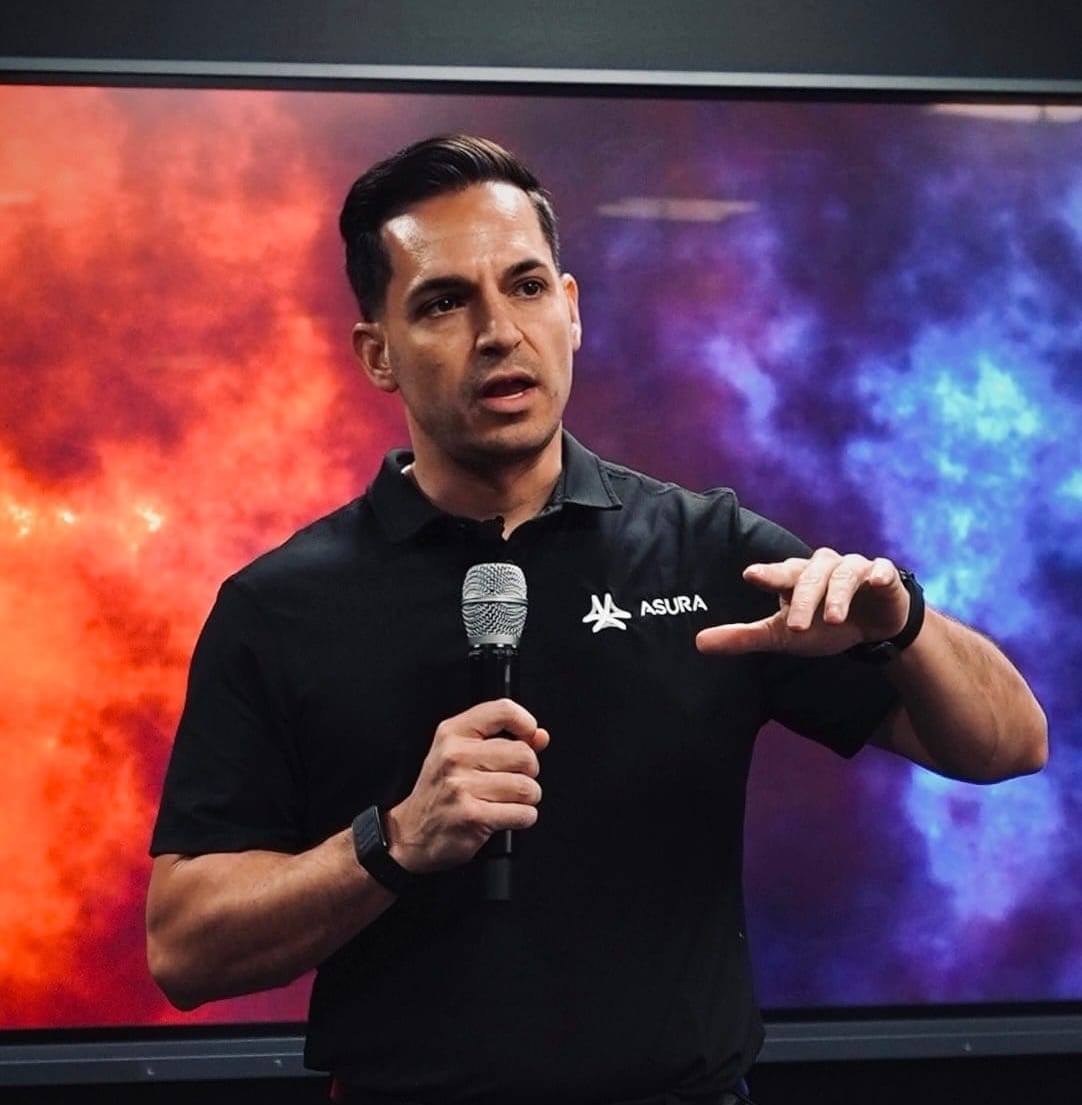
Adrian Anania is VP of Performance and Operations at ASURA Group. 16 years in retail automotive. 12 years coaching F&I managers nationally. $100M+ in revenue generated for clients. Average $895 PRU increase in 90 days.
See also: menu order system
See also: F&I conversation
See also: customer psychology